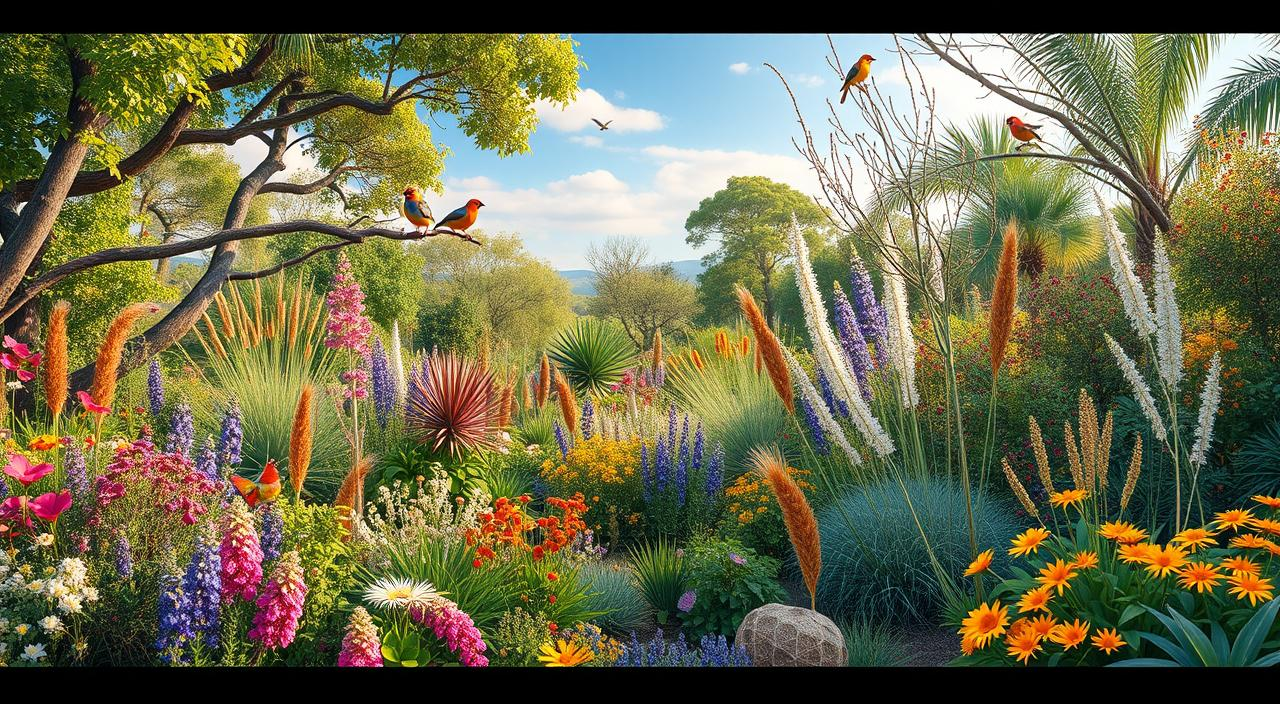
Want more birds—and more variety—without relying on constant feeders?
The fastest, most reliable way is to grow native plants for birds:
local trees, shrubs, and flowers that power the insect-and-berry food web birds depend on.
A layered planting (tree + shrub + wildflowers) creates food and shelter in every season.
- Pick your region (ZIP/postcode tools help) and choose true local natives.[3]
- Plant structure first: one small tree + 2–3 shrubs (cover + berries).
- Add the “insect engine” (a high-value host tree where feasible—often an oak in many regions).[2]
- Finish with flowers + grasses for seeds and late-season insects (asters are a classic late-season workhorse).[4]
You don’t need 50 species. A small set of high-function plants, arranged well, can outperform a scattered “pretty” garden.
Why native plants matter for birds
Birds don’t just need “pretty landscaping.” They need a functioning food web: insects to feed nestlings,
berries and seeds for energy, and shelter that reduces predation.
A widely shared summary of major research reports large bird declines in North America since 1970, which puts habitat quality in the spotlight.[1]
Native plants help rebuild that web because local insects recognize them as host plants.
Those insects (especially caterpillars) are a critical protein source for many songbirds during nesting season.
In plain terms: if you want more chickadees, wrens, and warblers raising young nearby, you need the plants that produce the bugs.
A simple example is oak. Oaks are often highlighted as high-impact “keystone” plants because they can support many insect species,
which ripples up the chain to birds.[2]
What “native” really means (and how to choose correctly)
“Native” is geography. A plant can be native to one region and non-native (or invasive) in another.
To pick the right native plants for birds, start with tools that filter by your location.
Use a location-based plant finder (best shortcut)
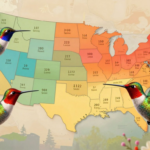
The National Audubon Society’s Native Plants Database lets you enter your ZIP code and get plants
that support birds where you live. It’s one of the easiest ways to avoid accidentally planting something that isn’t truly local.[3]
Confirm with local experts (high confidence)
- Your state university extension office
- Local native plant society
- Regional habitat programs / conservation groups
Choose “function,” not just a species list
The highest-performing bird habitats usually include:
(1) a host tree (insects), (2) fruiting shrubs (berries),
(3) seed-rich wildflowers, and (4) winter cover.
The exact species change by region—but the roles stay the same.
The 10-plant starter stack (maximum bird impact)
If you want a practical plan that scales up or down, start with these 10 “roles.”
Use your location-based plant finder to choose the best local species for each role.[3]
How to pick your winners (quick scoring method)
- Food web value: Does it strongly support insects or produce heavy fruit/seed?
- Season coverage: Does it fill a gap (early spring, late fall, winter)?
- Structure: Does it add nesting/shelter (dense branching, evergreen cover, layered edges)?
Starter stack table (choose local species for each role)
| Role | Why birds care | Examples (pick local natives) |
|---|---|---|
| Keystone canopy tree | Hosts insects; nesting sites; shade + microclimate | Oak (Quercus spp.) is often cited as a high-impact host in many regions.[2] |
| Understory fruit tree | Summer fruit; mid-height nesting cover | Serviceberry (Amelanchier spp.), native cherries/plums (Prunus spp.) |
| Fall berry shrub | Migration fuel (berries/fruit) | Dogwood (Cornus spp.), viburnum (Viburnum spp.) |
| Winter berry shrub | Cold-season calories when insects are scarce | Holly (Ilex spp.) |
| Thicket-forming shrub | Predator escape + nesting structure | Elderberry (Sambucus spp.) (choose your local native species) |
| Seed powerhouse wildflower | Finch-friendly seed heads into winter | Coneflowers (Echinacea spp.), native sunflowers (Helianthus spp.) |
| Late-season pollinator + bird plant | Extends late-season insects and forage | Asters are widely promoted for late-season habitat value.[4] |
| Meadow grass/sedge | Seeds + cover; supports ground foragers | Native bunchgrasses/sedges (choose local Carex/grass species) |
| Ground layer | Foraging habitat; safer fledgling movement | Leaf litter + region-suited native groundcovers |
| Evergreen cover | Winter roosting + predator protection | Region-appropriate native conifers or broadleaf evergreens |
and fill the rest with flowers + sedges. Function beats size.
A four-season food plan: nectar, insects, fruit, seeds
Spring: nectar + emerging insects
- Prioritize early blooms (true local natives) so insects rebound—then birds rebound.
- Avoid broad pesticide use when possible, especially during nesting season (it reduces insect food).
Summer: caterpillars for nestlings
Summer is “baby bird season.” Many songbirds rely on soft-bodied insects (especially caterpillars) to feed chicks.
Planting host-heavy natives is one of the most direct ways to increase that food supply.
Oaks are often highlighted as high-impact hosts in many regions.[2]
Fall: berries + seeds for migration
- Plant multiple berrying shrubs so fruit ripens in sequence.
- Leave seed heads standing—many birds harvest them into winter.
Winter: cover matters as much as calories
In winter, birds are hunting safety: roosting pockets out of wind, dense structure to dodge hawks,
and reliable fruit or seed. Evergreens and thick shrubs can make the difference between “visits” and “residency.”
Design a bird-friendly layout (layering that boosts survival)
The most bird-active yards often look like a natural edge:
tall canopy above, understory and shrubs in the middle, and flowers/grass below.
This structure creates multiple feeding zones and fast escape routes.
The 5-layer blueprint
- Canopy tree: insect engine + nesting
- Understory tree: fruit + mid-height cover
- Shrub layer: berries + thickets
- Wildflower layer: seeds + insect support (include late-season plants like asters).[4]
- Ground layer: leaf litter + native groundcovers/sedges for foraging
Where to place plants for the biggest payoff
- Cluster, don’t sprinkle: birds use dense patches more than single “specimen” plants.
- Create a safe corridor: connect shrubs so birds move while staying covered.
- Put berries near cover: birds feed longer when they can retreat quickly.
Avoid these common mistakes (that reduce bird visits)
1) Planting “wildlife-friendly” non-natives that don’t support the local food web
Some ornamentals offer nectar but support far fewer local insects.
That can mean fewer caterpillars and fewer nesting birds. Use a location-based database to stay truly native.[3]
2) Choosing invasive species by accident
A plant can be sold at a garden center and still cause ecological harm in your region.
Verify “native to my area” and “non-invasive” with local extension or native plant society guidance.
3) Over-tidying the yard
Leaving some leaf litter and natural structure supports insects and foraging.
Think “managed wild,” not “sterile.”
4) Using unlicensed images or copying plant lists
For long-term trust (and fewer headaches), use your own photos or properly licensed images and write in your own words.
Unique photos of your yard, before/after plantings, and seasonal results are one of the best credibility upgrades.
Planting + maintenance: keep it bird-friendly
Start small (and succeed)
- Week 1: Pick your 10 roles and choose local species for each role.[3]
- Week 2: Plant shrubs and trees first (they take longest to mature).
- Week 3: Add wildflowers and sedges/grasses for seeds and seasonal insects (include late-season bloomers).[4]
Water + mulch (especially year one)
Most natives still need consistent watering while establishing.
Mulch conserves moisture and reduces weeds, but keep mulch away from trunks and avoid burying crowns of perennials.
Pruning and cleanup timing
- Delay heavy pruning during peak nesting season.
- Leave seed heads through winter; cut back in early spring if needed.
(nectar + seed producers), adding a shallow water dish, and creating a small “cover corner” with dense plants.
FAQ
Do native plants really attract more birds than feeders?
Feeders can help, but native plants build habitat: insects for nesting, berries for migration,
cover for safety, and food across more seasons. The best yards usually combine both.
What are the best native plants for birds in my state?
Use a location-based tool like Audubon’s Native Plants Database, then prioritize food-web value and four-season coverage (insects + berries + seeds + cover).[3]
What’s the single highest-impact plant I can add?
In many regions, a high-value native host tree (often an oak) is commonly cited as a top-impact choice because it can support many insects that birds rely on—especially during nesting season. Confirm the best species for your exact location.[2]
How can I help birds if I only have a balcony?
Use local native container plants (nectar + seed producers), add a shallow water source, and provide a small “cover corner” with dense plants.
Even small habitats can act as stepping stones.