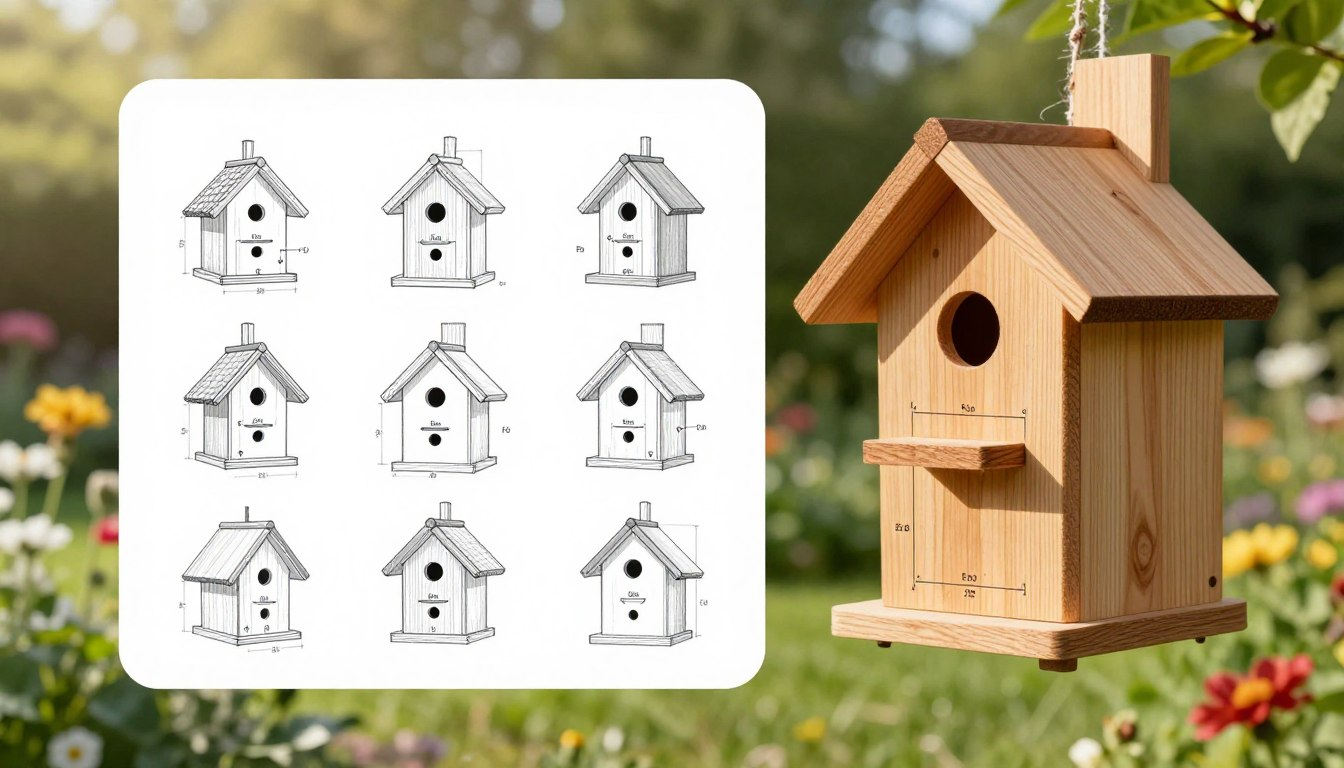
A birdhouse only works if it matches the bird. The right entrance hole size,
floor space, and hole-to-floor depth can improve nesting success,
reduce predator reach, and discourage unwanted competitors.
TL;DR (the fastest way to get birds)
- Pick the bird first (based on what actually lives near you), then match the box.
- Hole size is #1: it controls who enters (and who can’t).
- Depth beats decoration: a deeper hole-to-floor distance improves safety.
- Mount on a smooth pole + baffle whenever possible (tree mounting is often a predator ladder).
- Build for weather: thick walls, sloped roof overhang, ventilation + drainage.
30-second decision flow:
- Which region are you in? (North America vs UK/Europe)
- Pick your target bird → choose its hole size.
- Use at least the minimum inside floor and hole-to-floor depth.
- Mount in the right habitat + add a predator guard.
- Install before breeding season and keep it clean (maintenance calendar).
Birdhouse size chart for backyard birds (North America quick reference)
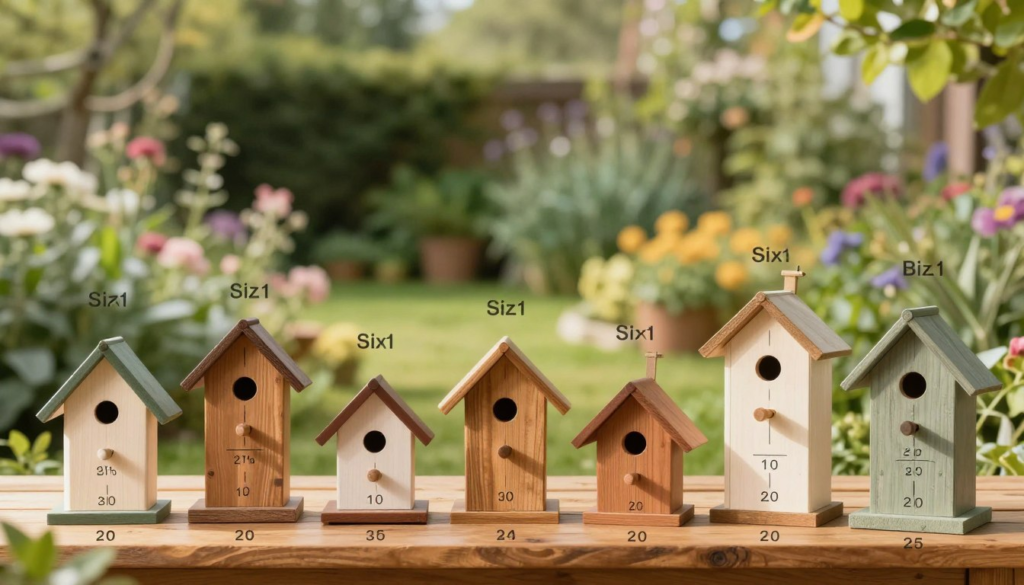
Important: Measurements below are inside dimensions unless noted. Hole size is the #1 factor that controls which species can enter—and which can’t. If you’re unsure which birds live in your area, start with common cavity nesters (wrens, chickadees, bluebirds, swallows).
Accuracy tip: These are practical, field-used targets. Plans vary slightly by source. If you build a little bigger (within reason) while keeping the hole size correct and the box deep, you usually improve safety and temperature stability.
| Bird species (common) | Entrance opening | Floor (inside) | Box height (front, inside) | Bottom of hole above floor | Mounting height | Notes |
|---|---|---|---|---|---|---|
| House Wren | 1″ round (25 mm) | 4″ × 4″ | 7″ | 5″ | 4–10 ft | Best in shrubs/edges; smaller hole helps exclude larger competitors. |
| Black-capped Chickadee | 1 1/8″ round (29 mm) | 4″ × 4″ (up to ~5″ × 5″ OK) | 9″ | 7″ | 5–15 ft | Add ~1–3″ wood chips/shavings (many chickadees nest on a base layer). |
| Tufted Titmouse | 1 1/4″ round (32 mm) | 4″ × 4″ (up to ~5″ × 5″ OK) | 9″ | 7″ | 5–15 ft | Add ~1–3″ wood chips/shavings. |
| White-breasted Nuthatch | 1 1/4″ round (32 mm) | 4″ × 4″ (or slightly larger) | 9″ | 7″ | 5–15 ft | Avoid oversized holes; add a metal entrance plate if squirrels enlarge openings. |
| Eastern Bluebird / Tree Swallow | 1 1/2″ round (38 mm) | 4″ × 4″ to 5″ × 5″ | 8–10″ | 6–8″ | 4–6 ft (bluebird) / 5–15 ft (swallow) | Pairing boxes 15–25 ft apart can reduce competition in shared habitat. |
| Downy Woodpecker | 1 1/4″ to 1 3/8″ round | 4″ × 4″ | 9″ | 7″ | 5–20 ft | Fill with wood chips (woodpeckers often need “excavation” material). |
| Northern Flicker | 2 1/2″ round (64 mm) | 7″ × 7″ | 17″ | 15″ | 10–15 ft (often higher works too) | Large, deep box; add wood chips; strong mounting + predator guard recommended. |
| American Kestrel | 3″ round (76 mm) | 8″ × 8″ | 16″ | 13″ | 10–30 ft | Open country; add wood chips; face south/east when possible. |
| Eastern Screech-Owl | 3″ round (76 mm) | 8″ × 8″ | 16″ | 13″ | 10–30 ft | Add 2–3″ wood chips/shavings; mount securely with predator protection. |
| Wood Duck | Oval ~4″ wide × 3″ high | ~12″ × 12″ | ~22″ | ~17″ | ~10 ft over/near water (varies) | Must add ~3″ wood shavings + an interior “ladder” for ducklings; predator guard is critical. |
Tip: If you’re building multiple boxes, keep a printed hole-size template (see Printable hole-size template) so you drill consistently.
Invasive competitor note (North America): European Starlings can fit through holes around ~1 9/16″. If you don’t want to attract starlings, use a smaller entrance and match the correct species.
UK & Europe quick-start (hole sizes + box types)
If you’re in the UK/Europe, many garden birds use different standards and box styles than typical North American charts.
The quickest win is to choose the right box type (hole-fronted vs open-fronted) and then the right
hole diameter.
| Bird (UK/Europe examples) | Box type | Entrance | Notes |
|---|---|---|---|
| Blue Tit, Coal Tit, Marsh Tit | Hole-fronted | 25 mm | Smaller holes can exclude larger intruders; no perch. |
| Great Tit, Tree Sparrow | Hole-fronted | 28 mm | Often the best “general” hole size for slightly larger tits. |
| House Sparrow, Nuthatch | Hole-fronted | 32 mm | In the UK, sparrows are native and can benefit from nesting help. |
| Robin, Wren, Pied Wagtail, Spotted Flycatcher | Open-fronted / shelf | Open face | Robins are open-nesters—avoid small round-hole boxes for them. |
UK/Europe placement shortcut: Put boxes up early (late winter), choose a sheltered spot, and avoid direct afternoon sun in hot spells. Use a rough interior and drainage.
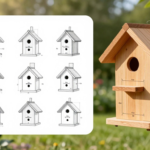
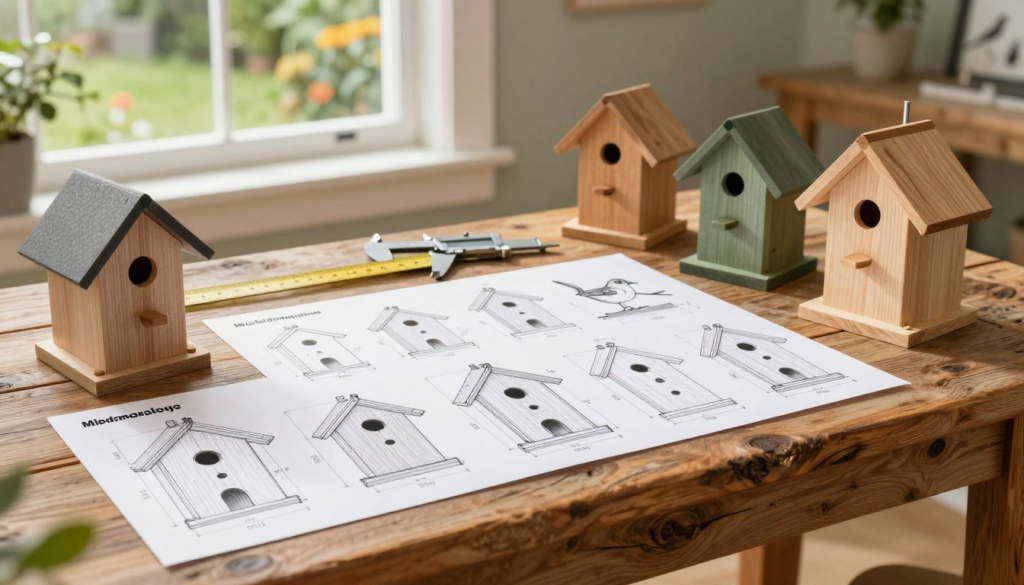
Printable hole-size template (print-at-home)
How to print: Print at 100% scale (no “fit to page”). After printing, verify one circle with a ruler. If your printer scales, your hole sizes will be off.
How to use: Cut out the circle you need and trace it onto the birdhouse front, or hold it up as a quick “is this too big?” check.
- 25 mm (≈ 1″)
- 28 mm
- 29 mm (≈ 1 1/8″)
- 32 mm (≈ 1 1/4″)
- 38 mm (≈ 1 1/2″)
- 64 mm (≈ 2 1/2″)
- 76 mm (≈ 3″)
If you need an oval entrance (e.g., wood ducks), draw a 4″ × 3″ oval on cardstock and cut it out as a tracing guide.
Build a durable birdhouse (materials, thickness, roof, access)
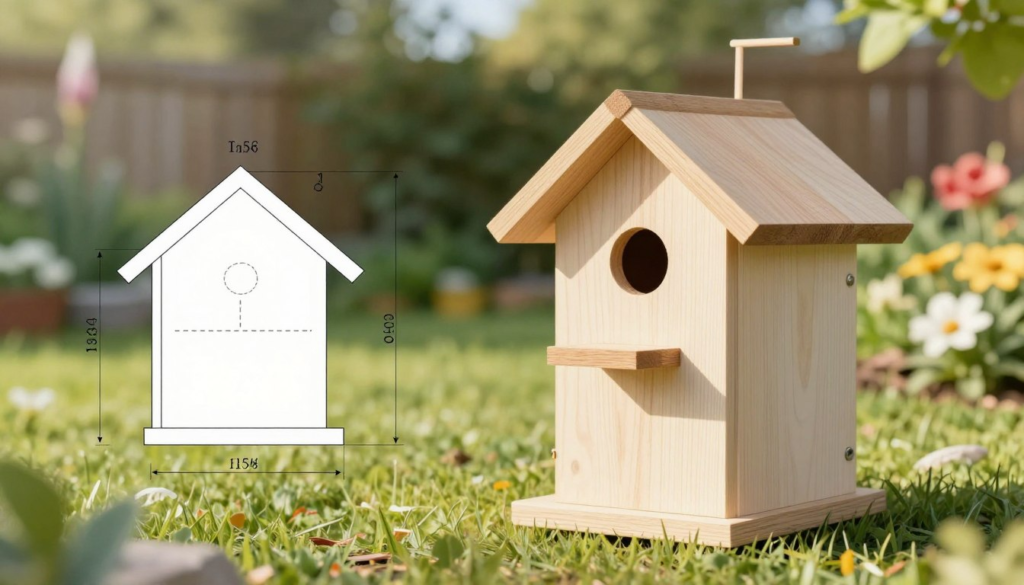
A “high-occupancy” birdhouse is basically a weatherproof, predator-resistant wooden box that’s easy to clean.
Fancy paint and decorative trims don’t help birds—design details do.
Materials that last (and keep chicks safe)
- Wood: untreated cedar, pine, cypress, fir (avoid pressure-treated wood inside the box).
- Wall thickness: aim for 3/4″ (19 mm) boards for insulation and durability.
- Fasteners: use galvanized or stainless screws (they hold tighter over time than nails).
- Finish: leave natural, or paint only the exterior (light colors in hot climates). Never paint or stain the interior.
Weatherproof details that matter
- Sloped roof + overhang: overhang the front by ~2–4″ and the sides by ~2″ to shed rain and reduce predator reach.
- Recessed floor: set the floor slightly up from the bottom edge so water doesn’t wick into the nest.
- Drainage: 4 holes in the floor (about 3/8–1/2″ each), or clipped corners.
- Ventilation: small holes near the top side walls (or narrow gaps under the roofline) to reduce overheating.
Cleaning access (this is non-negotiable)
Include a hinged side panel or roof that opens with a screw/bolt latch. If you can’t clean it quickly,
you’re more likely to skip cleaning—and parasites and old nests build up.
Simple “one-board” build concept (customize by species)
Use this as a durable baseline: Build a rectangular box with a removable/hinged side for cleaning. Then adjust:
- hole diameter (species-specific)
- hole-to-floor distance (deeper is safer)
- floor size (match your target bird)
If you’re following a plan from a conservation org, keep their measurements—especially for larger species (owls, ducks).
How to use the chart (the 5 measurements that matter)
- Entrance hole size: controls who can enter and helps block predators/competitors.
- Floor size: too small = cramped; too large = harder to keep warm and may attract the wrong species.
- Box height: deeper boxes reduce predator reach and improve fledgling safety.
- Hole height above floor: keeps chicks farther from the opening and claws/paws.
- Mounting height + habitat match: the “right box” in the wrong place often stays empty.
Rule of thumb: Pick the species first, then match the box. Don’t start with a random “decorative” birdhouse and hope birds adapt.
Features that improve safety and occupancy (what good birdhouses have)
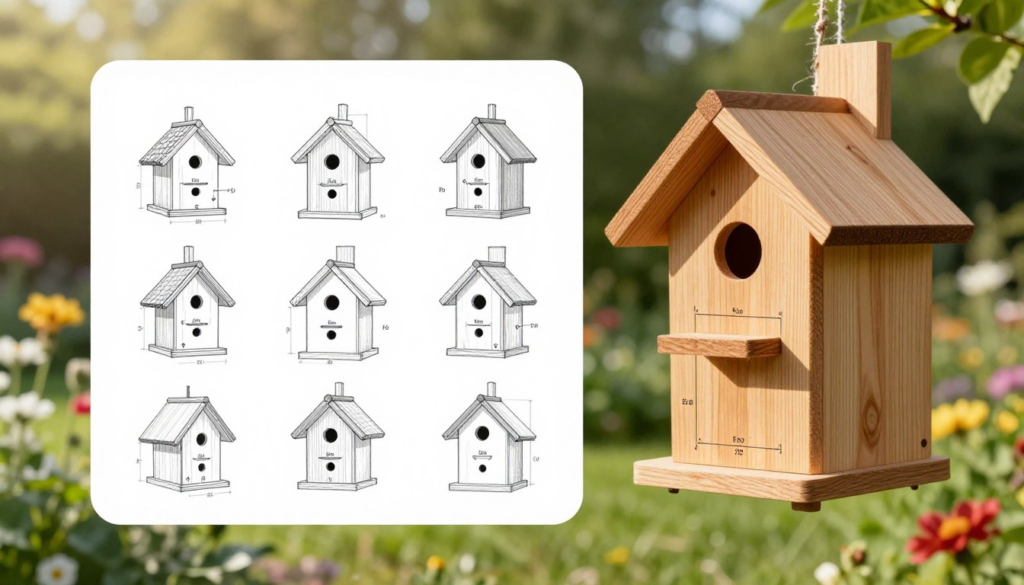
1) No perch
Perches don’t help most cavity nesters, but they can help predators and aggressive competitors. Skip them.
2) Thick walls, sloped roof, and a dry interior
- Walls: ~3/4″ wood insulates better and lasts longer.
- Roof: sloped roof with a front overhang (helps with rain + reduces reach-in predation).
- Recessed floor: helps keep the nest dry and the box from rotting quickly.
3) Ventilation + drainage (small details, big impact)
- Ventilation: small holes near the top side walls or narrow gaps under the roofline.
- Drainage: 4 small holes in the floor so rain/condensation can escape.
4) Rough interior or “fledgling ladder”
Many plans recommend grooves, saw-kerfs, or hardware cloth under the hole so fledglings can climb out.
This is especially important for swallows and wood ducks.
5) Predator protection (make it hard to climb, reach, or enlarge the hole)
- Depth matters: a deeper hole-to-floor distance reduces reach-in predation.
- Entrance protection: a metal hole plate can stop squirrels from enlarging openings.
- Guards/baffles: best on a pole; choose one below.
Predator guard options (quick chooser)
| Guard type | Best for | Practical notes |
|---|---|---|
| Stovepipe baffle | Pole-mounted boxes (very effective) | Common builds are ~8″ diameter and ~24–36″ long. Install below the box. |
| Cone baffle | Pole-mounted boxes | Works well when sized large and installed with enough clearance below the box. |
| Noel guard (wire mesh tunnel) | Boxes on trees/posts (or added protection on poles) | Helps reduce reach-in predation; works best combined with other deterrents. |
6) Safe materials
Use untreated, weather-resistant wood (cedar, cypress, pine). Avoid treated lumber for the box interior. If you paint, paint only the exterior and keep it light-colored in hot climates.
Placement: height, direction, habitat, spacing
Face away from prevailing wind and harsh afternoon sun
If summers are hot, give the box morning sun and afternoon shade. If spring storms are common, turn the entrance away from prevailing winds.
Match habitat to species (quick examples)
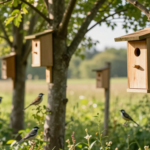
- Bluebirds: open lawns/fields with scattered trees; mount 4–6 ft on a pole with a predator guard.
- Wrens/chickadees/titmice: edges, yards with shrubs/trees; mount 5–15 ft.
- Tree swallows: open areas near water; consider a paired box setup to reduce conflict.
- Kestrels/owls: larger boxes, higher mounting, sturdy hardware, and clear flight paths.
Spacing matters
Many cavity nesters defend territories. If you want multiple nests, spread boxes out and avoid clustering the same species too tightly.
Safety note: Avoid placing boxes near pesticide/herbicide-treated areas where insect food sources can be reduced.
Maintenance calendar (cleaning & checks)
Goal: keep the box dry, clean, and safe—without repeatedly disturbing active nesting birds.
| Time of year | What to do | Why it matters |
|---|---|---|
| Late winter | Install/repair boxes, tighten screws, add guards, confirm drainage/vents are clear. | Boxes are ready before birds claim territory. |
| Early spring | Final quick check: stable mount, correct hole size, no wasp nests, clean interior. | Prevents heat/moisture problems and early-season competition. |
| Breeding season | Minimize disturbance. If you monitor, be brief, consistent, and avoid frequent opening. | Repeated disturbance can stress adults and reduce success. |
| After fledging | Remove old nests, scrape debris, brush out, check for loose seams and leaks. | Reduces parasites and makes the box attractive for future broods. |
| Autumn | Deep clean + repairs. Consider leaving boxes up for roosting in cold regions. | Extends box life and helps winter sheltering in some areas. |
Cleaning tip: Avoid strong chemicals inside boxes. A dry scrape + brush is usually enough. Replace any rotten wood and keep drainage holes open.
Common mistakes that keep birdhouses empty
- Wrong hole size (too big invites the wrong birds; too small blocks your target species).
- Shallow box (predators can reach the nest; fledglings can fall out early).
- No cleaning access (old nests and parasites build up season after season).
- Placed in the wrong habitat (e.g., bluebird box deep in woods).
- Decorative but unsafe designs (tiny boxes, no drainage, no ventilation, glued seams that fail).
- Mounted like a predator ladder (tree trunk/fence post with no baffle, or near jump-off branches).
Wildlife care note: Never open a box repeatedly if birds are actively nesting (it can cause stress or abandonment). If monitoring, be brief and consistent, and follow local guidance.
FAQ
What is the best all-around birdhouse hole size?
There isn’t one. Hole size is species-specific. For small songbirds like wrens and chickadees, start around 1″ to 1 1/8″. For bluebirds, 1 1/2″ is common. In the UK/Europe, 25 mm and 28 mm are common standards for tits.
Should I add nesting material inside?
Most songbirds bring their own nesting material. However, some species (woodpeckers, owls, wood ducks) often need a base layer of wood chips/shavings. Use clean, untreated wood shavings (never dryer lint).
When should I put birdhouses up?
Late winter is ideal so boxes are available when breeding season begins. Clean boxes at the end of the season and again before spring if needed.
Can robins use a regular birdhouse?
Robins are typically open-nesters. They prefer an open-fronted nesting shelf/platform under cover (like under an eave), not a small round-hole cavity box.
How do I stop bees/wasps from taking over?
Put boxes up early, avoid mounting in full-day sun, and clean out early insect nests before birds begin nesting. (Do not disturb an active bird nest.)
My entrance hole keeps getting enlarged—what should I do?
Add a metal entrance hole plate and make sure the box is mounted on a pole with a baffle. Enlarged holes can allow predators and larger competitors inside.
References
- Mass Audubon — “Birdhouse and Nesting Chart” (PDF): https://www.massaudubon.org/content/download/10092/file/birdhouses2.pdf
- Cornell Lab of Ornithology (NestWatch) — All About Birdhouses: https://nestwatch.org/learn/all-about-birdhouses/
- NestWatch — Features of a Good Birdhouse: https://nestwatch.org/learn/all-about-birdhouses/features-of-a-good-birdhouse/
- NestWatch — Nest Box Placement: https://nestwatch.org/learn/all-about-birdhouses/nest-box-placement/
- NestWatch species guidance (examples): White-breasted Nuthatch https://nestwatch.org/learn/all-about-birdhouses/birds/white-breasted-nuthatch/ • Tufted Titmouse https://nestwatch.org/learn/all-about-birdhouses/birds/tufted-titmouse/ • Northern Flicker https://nestwatch.org/learn/all-about-birdhouses/birds/northern-flicker/ • American Kestrel https://nestwatch.org/learn/all-about-birdhouses/birds/american-kestrel/
- U.S. Fish & Wildlife Service — “Nest boxes for wood ducks” (PDF): https://upload.wikimedia.org/wikipedia/commons/9/90/Nest_boxes_for_wood_ducks_%28IA_nestboxesforwood510usfi%29.pdf
- RSPB — How to build a bird box: https://www.rspb.org.uk/helping-nature/what-you-can-do/activities/build-a-birdbox
- BTO — Make a nest box (UK hole sizes): https://www.bto.org/learn/helping-birds/nest-boxes/make-nest-box
What’s unique in this guide:
- Combined North America + UK/Europe quick-start guidance on one page.
- Added a print-at-home hole-size template and a simple maintenance calendar.
- Included predator-guard options and build details focused on occupancy and safety.