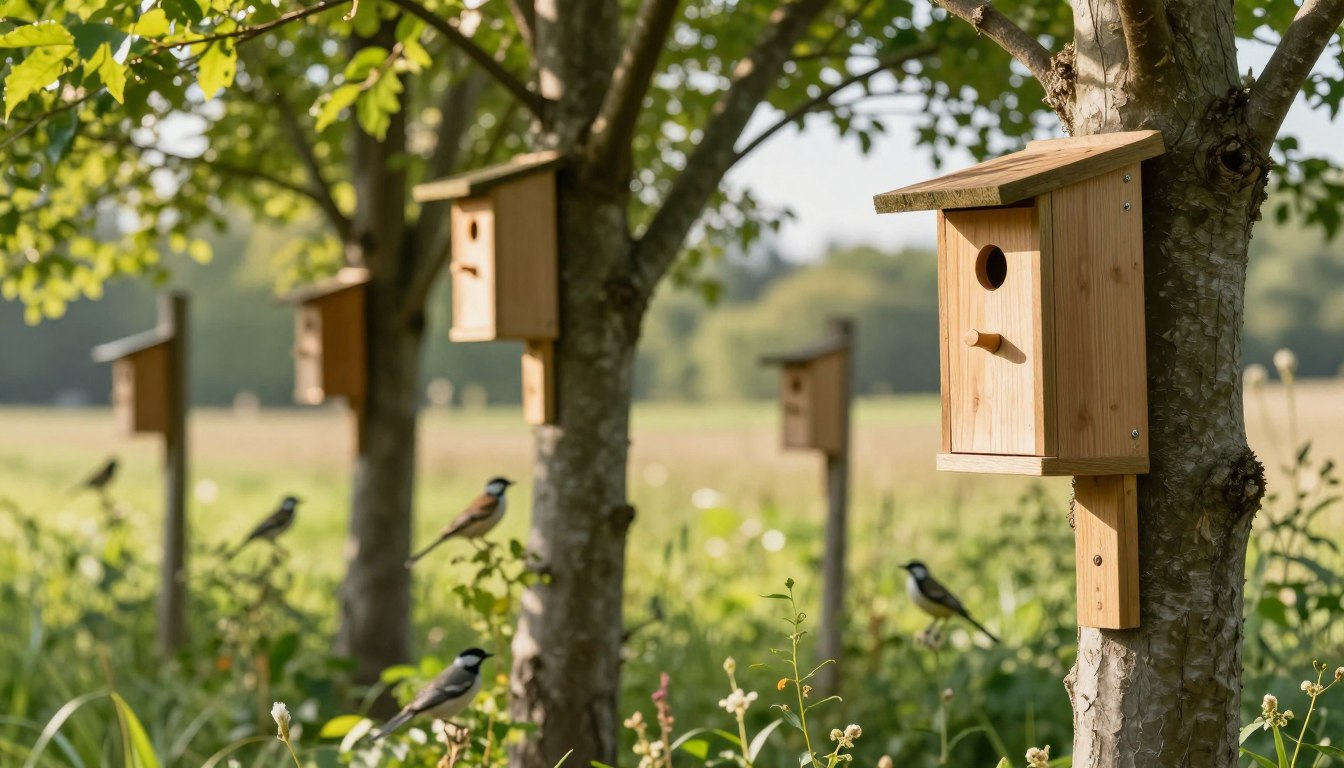
You spent the weekend building a solid cedar box. You drilled the entrance hole to exactly the right diameter, double-checked it with calipers. You mounted it carefully on a post at what felt like a sensible height, stepped back, and felt genuinely good about it.
Then you waited.
March passed. Then April. You kept checking — not obsessively, just enough to catch a glimpse of movement. A shadow. A flutter. Anything. You started noticing the neighbor’s box three houses down, the slightly lopsided one on a fence post near their vegetable garden, the one with the perch still on it. Birds moved in there by mid-March. You checked yours again. Still empty. Still swaying gently in the breeze on its post, facing what you were pretty sure was east, doing absolutely nothing.
That particular frustration — watching a worse box succeed while yours sits untouched — usually has a cause. In most cases it comes down to one of four things: predator access, heat exposure, wrong habitat, or timing. Not the box itself. Not the wood or the finish or the hole diameter. The placement. This guide works through each of those four problems methodically, starting with a ten-minute check you can do before a single screw goes in.
⚡ The four placement problems that account for most empty boxes
>No predator protection — a box that’s been raided once will often be avoided by birds that season, even if you clean and repair it
>Wrong habitat for the target species — a bluebird box in a wooded yard, a wren box in an open field; direction and height can’t fix this
>Too much heat or direct afternoon sun — interior temperatures above 107°F are lethal for eggs and chicks; this kills clutches silently
>Wrong timing — a box that goes up in May has already missed the scouts; the birds that would have used it have committed elsewhere
Before You Drive a Single Screw: The 10-Minute Yard Check
Skip this and you might find yourself watching your neighbour’s box fill up year after year while yours quietly stays empty — even though from the outside they look almost identical. Spend ten minutes on these four questions now and you’ll avoid most of the placement mistakes that are genuinely hard to diagnose later. The frustrating thing about placement problems is that nothing about the box reveals them. The box just sits there looking fine. That’s why they persist.
1. What does this spot feel like at 3 PM on a hot day?
Go out there in summer and actually stand at the planned mounting location in the early afternoon. Not to look at it — to feel it. If you’re squinting from reflected heat off a nearby wall, a fence panel, or a pale gravel path, your box will bake. Interior temperatures in a poorly oriented box can spike past 110°F on a July afternoon — hot enough to kill eggs outright and stressful enough to cause adults to abandon the nest entirely. This is one of those things that is very hard to see from inside the house at 9 AM. You have to go stand there in the afternoon heat to understand it.
2. Where does your worst spring rain come from?
You don’t need a weather station for this. Think back to the last time a serious spring storm soaked your back porch — which wall got hit, which direction the puddles formed. Wind-driven rain blowing directly into an entrance hole during a cold April night can chill a clutch of eggs irreversibly in a matter of hours. One bad storm at the wrong moment ends a season. This is the real reason “face the entrance east” became the standard advice in North America — it faces away from prevailing westerly weather in a single move. But it’s your specific yard’s storm track that matters, not the compass default.
3. Is there a clear, unobstructed flight path to the entrance?
Most cavity nesters won’t bother threading through branches to reach a nest hole. They want a landing approach they can see coming, at speed, and a departure path that doesn’t require navigation on the way out — especially when fledglings are involved. Stand at box height and look directly in front of the entrance. Dense branches within 6–8 feet are a problem in two directions at once: they’re an obstacle course for the birds arriving and departing, and they’re a launchpad for any cat, squirrel, or raccoon that’s worked out where the nest is.
4. Can you actually reach this box with a stepladder?
This sounds trivial until you’ve gone two or three seasons without cleaning a box because the ladder situation was awkward. Mites, blowfly larvae, and old compacted nesting material accumulate fast. A box that can’t be cleaned in under ten minutes will gradually stop being cleaned. A box that stops being cleaned will gradually stop being used. This is one of those things where the inconvenience of getting to the box is exactly proportional to how often it won’t happen.
Placement Checklist Before You Mount
Everything on this list looks fine at a glance — which is exactly why these mistakes are so easy to make and so hard to diagnose later:
>Mount solidly and permanently — a box that rocks or swings in wind signals instability and many species simply won’t commit to it
>Smooth metal pole over tree trunk whenever possible (see the predator section below for why the difference is substantial)
>Clear any branches, vines, or fence rails within jumping distance of the entrance hole
>Avoid heat traps: enclosed corners, south-facing walls that radiate stored heat all afternoon, reflective surfaces nearby
>Keep boxes well away from busy doors, foot-traffic paths, and bird feeders — feeders attract activity and competition that nervous cavity nesters avoid
>Never add an exterior perch — it gives House Sparrows a comfortable working position at the entrance and does nothing useful for the birds you actually want
Per-Species Height and Direction: The Numbers That Matter
These are starting points grounded in species-specific field data from monitored nest box programs — not generic approximations. Heights are given in both feet and metres. Use them as minimums and defaults, then let your actual yard conditions do the fine-tuning.
| Species | Box Type | Best Height | Entrance Direction | Notes |
|---|---|---|---|---|
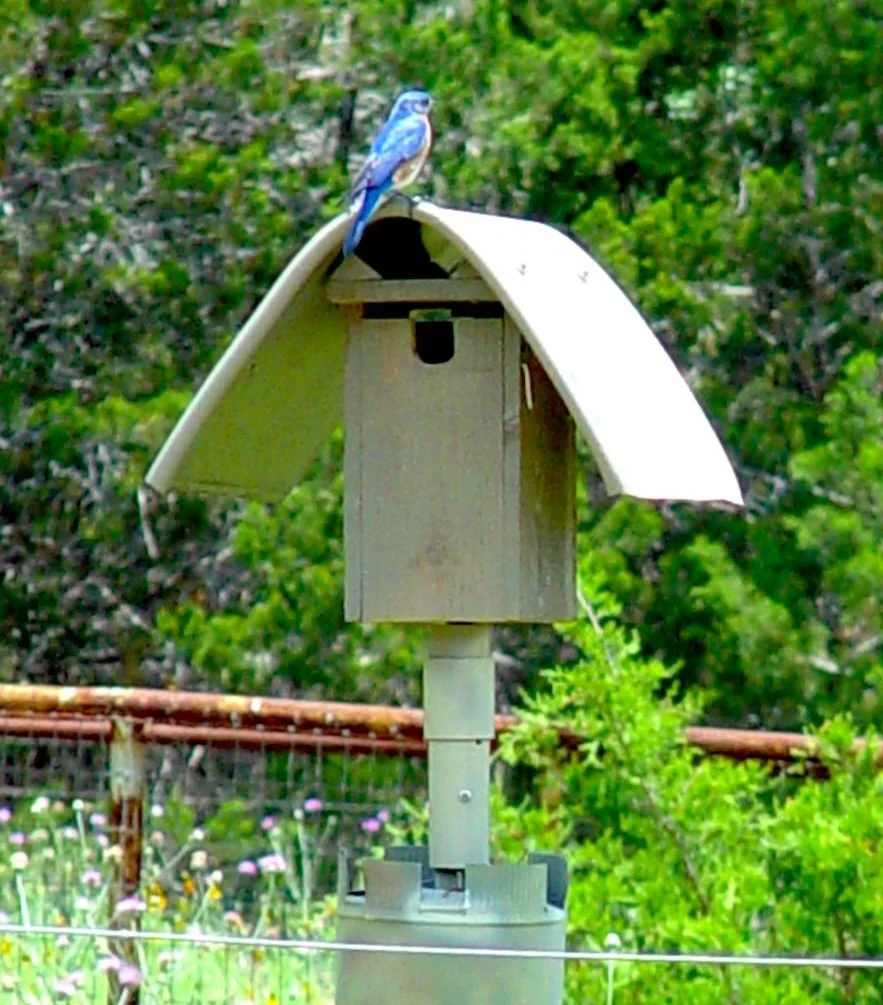
| Eastern Bluebird | Cavity nest box | 4–6 ft (1.2–1.8 m) | East preferred; north, south acceptable; west last resort | Face toward open habitat; pair boxes 15–20 ft apart if Tree Swallows compete; minimum 300 ft between bluebird boxes |
| Tree Swallow | Cavity nest box | 5–6 ft (1.5–1.8 m) | South or East | Open areas near water or meadow edges; predator guard essential; pair with bluebird box to reduce territorial conflict |
| House Wren | Cavity nest box | 5–10 ft (1.5–3.0 m) | Any direction | Within ~100 ft of woody cover with a clear flight path; keep well separated from bluebird and swallow boxes |
| Carolina Wren | Cavity or sheltered box | 3–6 ft (0.9–1.8 m) | Any, sheltered | Tolerates porches and shed eaves well; rain protection matters more than compass direction for this species |
| Black-capped Chickadee | Cavity nest box | 5–15 ft (1.5–4.6 m) | Away from prevailing wind | Partial sun is ideal; avoid deep shade and storm-facing exposure; add wood chips to floor |
| Tufted Titmouse | Cavity nest box | 5–15 ft (1.5–4.6 m) | Away from prevailing wind | Forest edges and yards with mature trees; stable mounting matters more than compass precision here |
| White-breasted Nuthatch | Cavity nest box | ~5 ft (1.5 m) | East | Out of direct afternoon sun in warm climates; metal entrance plate strongly recommended — squirrels target these |
| Red-breasted Nuthatch | Cavity nest box | 5–15 ft (1.5–4.6 m) | Away from prevailing wind | More likely to use boxes where natural snags and dead trees are scarce; irruptive — presence varies by year |
| Northern Flicker | Large cavity box | 6–12 ft (1.8–3.7 m) | South or East | Needs wood chips inside; tilt slightly forward so fledglings can climb to the entrance hole; strong mounting required |
| Purple Martin | Colony housing or gourds | 10–15 ft (3.0–4.6 m) | South or West — adjust for local storm patterns | Wide-open flight bowl required; no trees or buildings within 40–60 ft; colony housing only — single boxes are rarely used |
| Eastern Phoebe | Open nest shelf | 3–16 ft (0.9–4.9 m) | Any, sheltered | Under eaves or overhangs near cover; useful practical alternative to problem nests on light fixtures or garage doors |
| Barn Swallow | Open nest shelf/cup — not a cavity box | Under eaves, 8–12+ ft (2.4–3.7+ m) | Sheltered from wind and rain | On a building in a sheltered spot; avoid active doorways; ensure mud is available nearby for nest construction |
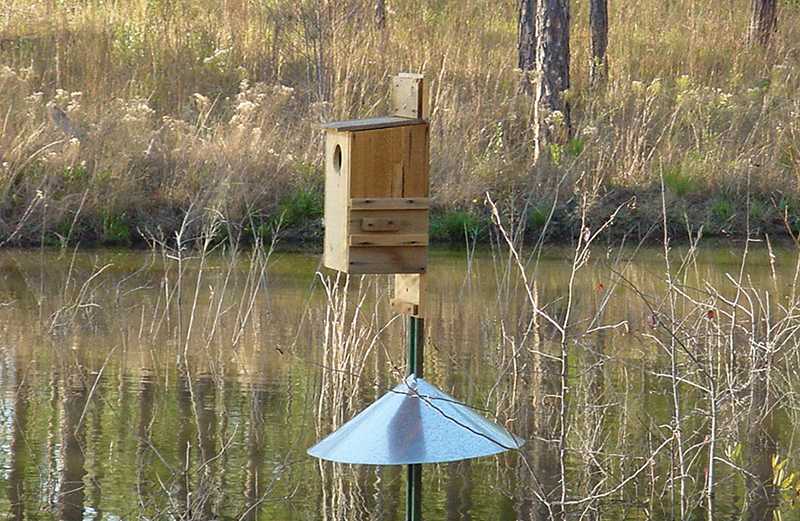
| Wood Duck | Waterfowl nest box | 6–30 ft (1.8–9.1 m) | South or West | Near or over water, at least 3 ft above high water mark; predator guard non-negotiable; minimum 600 ft spacing between boxes |
| Hooded Merganser | Waterfowl nest box | 6–25 ft (1.8–7.6 m) | Toward water | Near or over water; 3″ wood shavings required inside; often shares habitat and timing with Wood Ducks |
| Mallard | Waterfowl nesting structure | ~3 ft (0.9 m) | Away from prevailing wind | Wetland management context — not a typical backyard project; follow local wildlife guidance |
Choosing the Right Direction for Your Specific Climate
This is where most setups quietly fail — not because of the box, but because of what surrounds it. Direction isn’t about birds having a compass preference hardwired into their behaviour. It’s about controlling three environmental variables: heat, wind-driven rain, and cold. Get those three under control and the specific cardinal direction becomes almost secondary. Miss one of them and you’ll spend years wondering why a box in a seemingly good location never gets used.
Rule 1: Afternoon Heat Is Your Biggest Enemy
This catches people off guard. Cold and wind feel like the obvious dangers — they’re the things you feel when you’re outside in spring checking the box. But on a hot day in July or August, the interior of a nest box in full afternoon sun can reach temperatures lethal for chicks and stressful enough to cause adults to stop brooding entirely. The eggs die. The adults leave. You find an empty box with no obvious explanation.
If your summers are warm — roughly anything south of a line through New England, the northern Great Lakes, and the Pacific Northwest — make north or northeast your default starting direction. Alternatively, use any direction that gives the box morning light and afternoon shade. A neighbouring tree that casts shadow from 1 PM onward is worth more than any compass adjustment. Go stand in the spot at 2 PM in July before you commit to it.
Rule 2: Know Your Storm Direction
In most of the contiguous United States, dominant prevailing wind runs roughly west to east — which is exactly why “face the entrance east” became the standard shorthand advice. In a single move it faces away from prevailing wind and away from afternoon sun. It’s a good default because it solves two problems simultaneously.
But it breaks down quickly if your yard has a specific microclimate: a gap in the tree line that channels north wind straight across the garden, a slope that accelerates storms from the southwest, a building that redirects rain in a way no compass can account for. The RSPB recommends facing UK boxes between north and east specifically to avoid both strong sun and the wettest prevailing winds. The principle translates everywhere: face away from whatever combination of wind and sun hits hardest in your specific location. Your yard is not the average yard the advice was written for.
Rule 3: Southern Hemisphere Readers — Reverse the Sun Logic
Strong afternoon sun in Australia, South Africa, and South America comes from the north and west, not the south. The “avoid afternoon bake” principle applies in full — you just apply it by avoiding north and northwest exposures instead of south and west ones. Everything else in this guide translates directly.
Predator-Proof Mounting: The Decision That Matters More Than Any Other
Most empty birdhouses aren’t empty because of direction or height. They’re empty because something raided the nest — once, maybe twice — and the birds stopped coming back. You often won’t see it happen. You’ll just notice that a nest progressing well one week is cold and abandoned the next. No signs of struggle. No feathers. Just nothing, where something was.
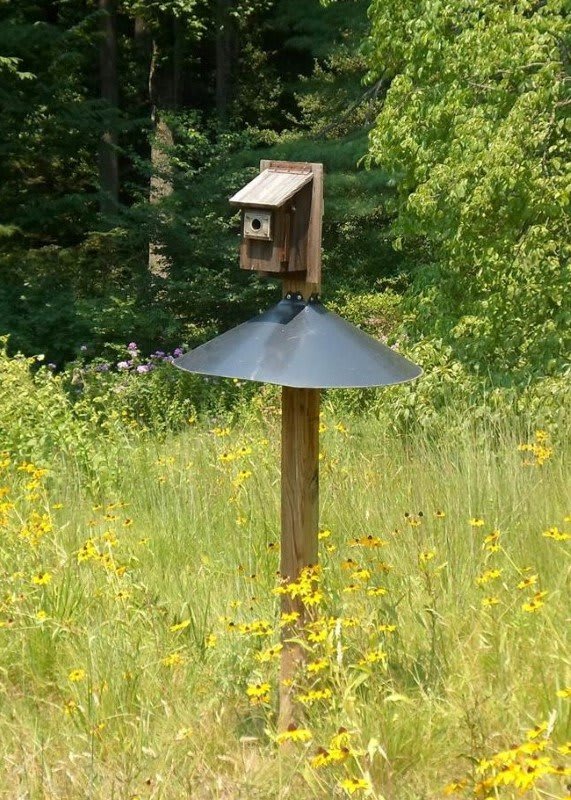
Raccoons, snakes, squirrels, and outdoor cats are relentless and surprisingly athletic. A raccoon can reach 6–8 inches into an entrance hole from a roof overhang. A rat snake can climb a wooden fence post with ease — bark is a perfectly functional climbing surface. A cat can leap several feet horizontally from a branch that looks too far away to matter. The box you built for birds is also exactly the right size and height to attract the attention of every predator in a 200-yard radius. Planning for that from the start is not optional if you want consistent occupancy.
The Mounting Hierarchy
Placement Details That Prevent Problems
>Keep the entrance hole at least 6–8 feet horizontally from any branch or structure a cat could leap from
>Mount absolutely solid — a box that sways in wind signals instability and many species will simply refuse to commit to it
>For wood duck and merganser boxes near water, a predator guard isn’t optional — nest losses in unguarded water boxes are common enough to be documented in the monitoring data
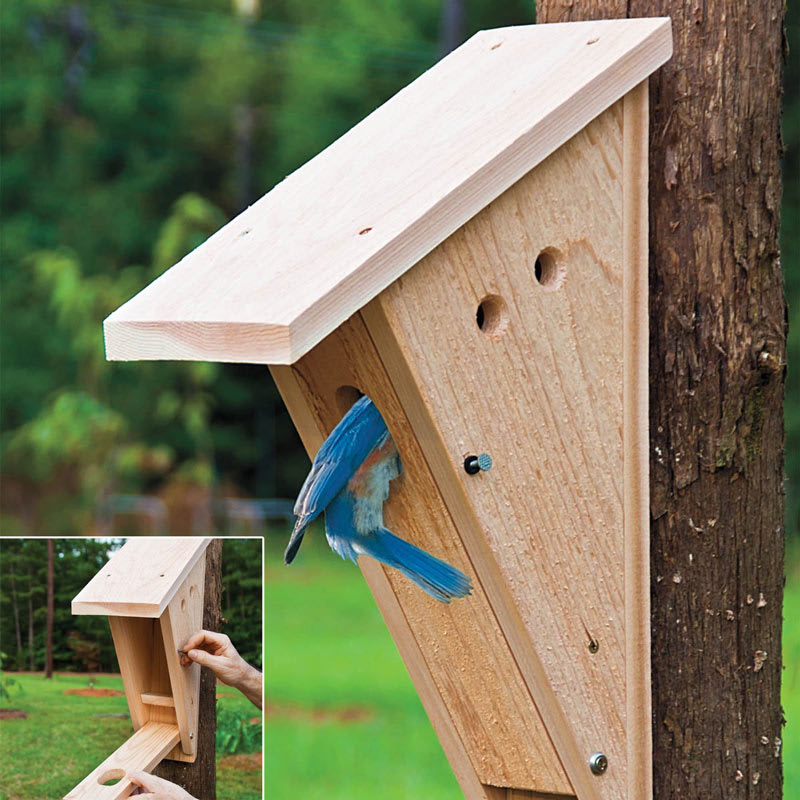
>Cornell Lab’s NestWatch specifically recommends a roof overhang of at least 5 inches in front to prevent raccoons from reaching down through the entrance from above — more than most plans call for
Spacing and Competition: The Invisible Reason Boxes Go Empty
You can have four nest boxes in a yard, all perfectly built and oriented, and end up with four empty boxes — because you placed them too close together. Most cavity nesters are territorial, and that territory extends well beyond the box itself. A bluebird pair isn’t just claiming the box. They’re claiming a 200–300 foot radius around it, and they’ll spend significant energy chasing off anything that threatens that boundary. Two bluebird boxes 50 feet apart don’t double your bluebird population. They produce one defended box and one perpetually contested, usually empty one.
Two Strategies That Reliably Work
The bluebird-swallow pair: Tree Swallows and Eastern Bluebirds will fight over a single box all spring, with neither bird nesting productively. The solution — borne out across decades of nest monitoring data from NestWatch and bluebird trail managers — is to install two boxes close together, 15–20 feet apart. Each species claims one, and the proximity paradoxically reduces overall aggression because each bird has a clear territory with a clear boundary. Both boxes get used. It sounds counterintuitive until you see it work the first time, and then it seems obvious.
The wren separation rule: House Wrens are small, aggressive, and will methodically stuff competing nest boxes with sticks to make them unusable — a behaviour that frustrates bluebird trail managers across much of North America. If you want wrens and bluebirds in the same yard, put their boxes on opposite sides of the property, preferably with different habitat character between them. Even that may not be enough in a small yard with continuous shrubby cover. Watch the behaviour for a season before concluding the placement is the problem.
Maintenance Without Causing the Problem You’re Trying to Prevent
Here’s the tension that nobody talks about enough: the more you care about your nest boxes, the more likely you are to over-manage them. Checking too often during the breeding season — especially during laying and early incubation — is a documented cause of nest abandonment. The birds you’re trying to help are making a life-or-death calculation every time something approaches the box. A human checking twice a week during egg laying doesn’t register as care. It registers as a repeated threat. Understanding this distinction is the difference between a successful nest and a cold clutch you never saw coming.
How to Do It Right
>Major cleaning: late fall or early winter, after all birds have left for the season. This is the window for scrubbing the box, replacing any rotten wood, clearing drainage holes, and adding fresh wood shavings if needed — with zero impact on active nesting.
>In-season monitoring: once a week maximum. Tap gently before opening, open quickly, get a brief look at what’s there, close it. The whole check should take under thirty seconds. If you need longer, you’re doing something other than monitoring.
>During laying and early incubation: leave it alone. This is the highest abandonment-risk window. If the box shows signs of active adult activity at the entrance, trust that and step back entirely. Note it, walk away.
>Never relocate an active box. If the placement is wrong, you noted it, you know it — fix it next season after the birds have left. Moving a box mid-season means losing that brood entirely and likely that pair for the rest of the year.
Practical Tips for Getting Your Box Occupied This Season
These aren’t theoretical improvements. They’re the kind of details that show up consistently in monitored nest box success data, and they’re specific enough to act on immediately:
>Get the box up in late January or February. Bluebirds start scouting territories in late winter, weeks before most people think to put a box out. A box that appears in April has already missed the first — and often most productive — scouts of the season.
>Install the predator baffle at the same time as the box. Not after a raid. After a raid, you may have lost the season’s first brood and the adults may have written off that location. The baffle is not a repair — it’s part of the original installation.
>Add a metal entrance hole plate immediately. Squirrels will chew a wooden entrance hole wider over winter and you won’t notice until the spring. A 1½″ bluebird hole that becomes 2″ is now a starling hole. A metal plate costs a few dollars and solves this permanently.
>Check what the birds in your yard already do. Where do bluebirds perch and forage? Where do chickadees move through the yard? The best box placement is usually an extension of existing behaviour patterns — not the corner of the yard that looks tidiest from your kitchen window.
>Keep boxes away from feeders. Feeders attract high traffic, competition, and aggressive jostling — exactly the conditions that make cautious cavity nesters nervous about committing to a nest nearby. Give them separation.
>Don’t use pesticides or herbicides near box locations. Cavity nesters feed their chicks almost entirely on insects during the first weeks of life. A chemically suppressed garden has no insects. A garden with no insects has no birds, regardless of the box quality.
Common Mistakes That Leave Boxes Empty All Spring
Most of these are invisible until you know what to look for. Nothing about the box signals the problem — which is exactly why they persist across multiple seasons:
❌ Mounting on a tree trunk with no predator deterrent
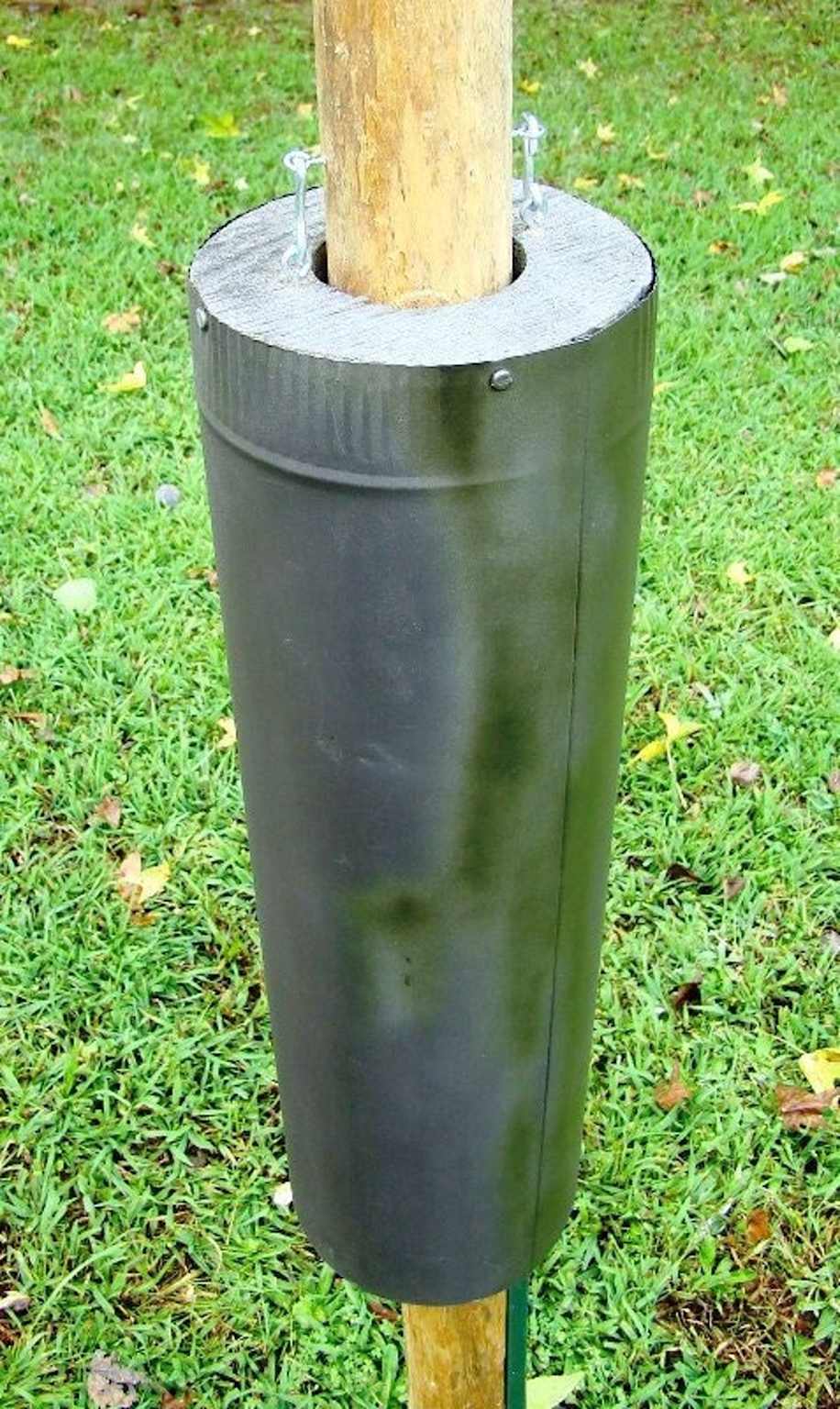
The most common raid scenario and the most preventable. Bark is a climbing surface. Don’t use it as your primary mounting substrate unless a Noel guard or similar deterrent is part of the plan from day one.
❌ Facing the box for aesthetics, not function
The box positioned to look attractive from the garden may be pointing directly into the afternoon sun or straight into the prevailing storm track. It will look fine from the house. Inside, it will bake or flood.
❌ Going too high “for safety”
Bluebirds specifically prefer 4–6 feet. Ten feet doesn’t offer better predator protection if there’s no baffle — it just makes the box harder to maintain, monitor, and clean. Height without a baffle is not a predator strategy.
❌ Clustering same-species boxes
Territorial birds will spend the season fighting over the boxes rather than nesting in them. The boxes will all show signs of attention — and all stay empty. Space same-species boxes by at least 100 yards; 300 feet minimum for bluebirds.
❌ Installing during the breeding season
A box that goes up in May is a decoration for the rest of that year. The scouts committed to other locations weeks ago. Put it up correctly and plan for next season to benefit from it.
❌ Wrong habitat — any direction
A bluebird box in a densely wooded yard. A wren box in an open field. A kestrel box surrounded by branches. Habitat mismatch is silent and invisible — there’s nothing about the box that reveals it. It just sits there, season after season, while the bird you wanted nests somewhere that matched its actual requirements.
❌ Ignoring the approach path
Dense branches directly in front of the entrance give predators a launchpad and give birds an obstacle course. Both discourage use. Clear the approach path before the box goes up, not after you’ve noticed nothing moved in.
Frequently Asked Questions
Do nest boxes really need to face a specific direction?
Direction matters, but it’s a secondary variable — not a primary one. The primary concerns are heat exposure, wind-driven rain, and predator access. Use the species table as your starting point and adjust to avoid afternoon sun and storm-facing exposure. A box pointing slightly “wrong” in a shaded, predator-guarded location will dramatically outperform a perfectly oriented box that overheats every afternoon in July.
Is a pole better than a tree for mounting?
Almost always, yes — specifically in backyard settings. A smooth metal pole offers nothing for predators to grip. A tree trunk offers bark, texture, nearby branches, and often adjacent vegetation that creates multiple climbing and jumping routes to the box. The only situations where a tree genuinely makes sense are species that specifically associate with forested habitat — and even then, a Noel guard or baffle is still worth adding.
My box is the right size and in decent habitat. Why is it still empty?
Work through this list in order: predator pressure (a raid you didn’t witness), habitat mismatch for the specific species you’re targeting, too much heat or direct afternoon sun, disturbance from checking too frequently, and competition from House Sparrows or House Wrens. The answer is almost always in the first three — and almost never “the birds just haven’t found it yet.”
Can I attract barn swallows with a regular birdhouse?
No. Barn swallows build open cup nests on horizontal surfaces under overhangs — barn rafters, garage beams, eave soffits. They have no interest in cavity boxes with entrance holes, regardless of the hole size. If you want to support them, mount a simple open shelf on the exterior of a building in a sheltered location near open foraging habitat, and make sure there’s exposed mud nearby for nest construction. That’s their actual requirement.
How far apart should boxes of the same species be?
For most small cavity nesters, at least 100 yards is a reasonable starting guideline. Eastern Bluebirds need a minimum of about 300 feet between boxes to avoid territorial conflict — and even that can be close in open habitat with good sightlines. Purple Martins are the main exception: they’re colonial nesters and will willingly share a housing structure. For wrens, even 100 yards may not be enough in a small yard with continuous shrubby habitat. Watch the territorial behaviour for a season and adjust before adding more boxes.
Why do birds visit and scout a box but never actually nest in it?
Usually one of three things: the dimensions are right but something about the immediate surroundings is triggering caution on repeated visits — a nearby branch, a reflective surface, excessive foot traffic; the habitat is borderline and the birds are weighing it against better options nearby; or a predator has been active near the box and left a scent trace. Cats in particular leave scent that birds detect and respond to even after the cat has moved on. If repeated scouting visits stop abruptly, check the area around the pole for any sign of predator activity.
Getting It Right Doesn’t Have to Be Complicated
The overwhelming majority of placement failures trace back to a short list: no predator protection, wrong habitat, too much afternoon heat, entrance facing the worst storm track. Fix those four things and you’ve solved 90% of the problem. Everything else — precise height within the species range, exact compass bearing, minor spacing adjustments — is genuine fine-tuning on top of a foundation that already works.
Height within the species range. Direction adjusted for your local sun and storm patterns. Enough space between boxes for each pair to have a working territory. A baffle that actually prevents climbing. Those are the variables worth your attention. The rest is detail.
Once you understand what the birds are actually evaluating on a scouting visit — predator risk, heat stability, habitat match, approach clearance — the whole process becomes considerably more predictable. Less mystery, more methodology. And once a box earns that trust, the birds come back to it year after year. The setup does its work quietly, and you get to watch what happens next.
Sources
>Cornell Lab of Ornithology NestWatch — Nest box placement: height, direction, habitat, and predator guard guidelines
>National Audubon Society — Birdhouse placement and species-specific habitat requirements
>RSPB — UK nest box positioning: direction, height, and seasonal timing
>Purple Martin Conservation Association — Colony housing requirements and placement specifications
>Cornell Lab All About Birds — Birdhouse basics: predator guards, maintenance, and species filters
Height and direction data follow Cornell Lab NestWatch specifications as primary reference, cross-checked against Audubon Society, RSPB, Purple Martin Conservation Association, and Tennessee Wildlife Resources Agency published guidelines.