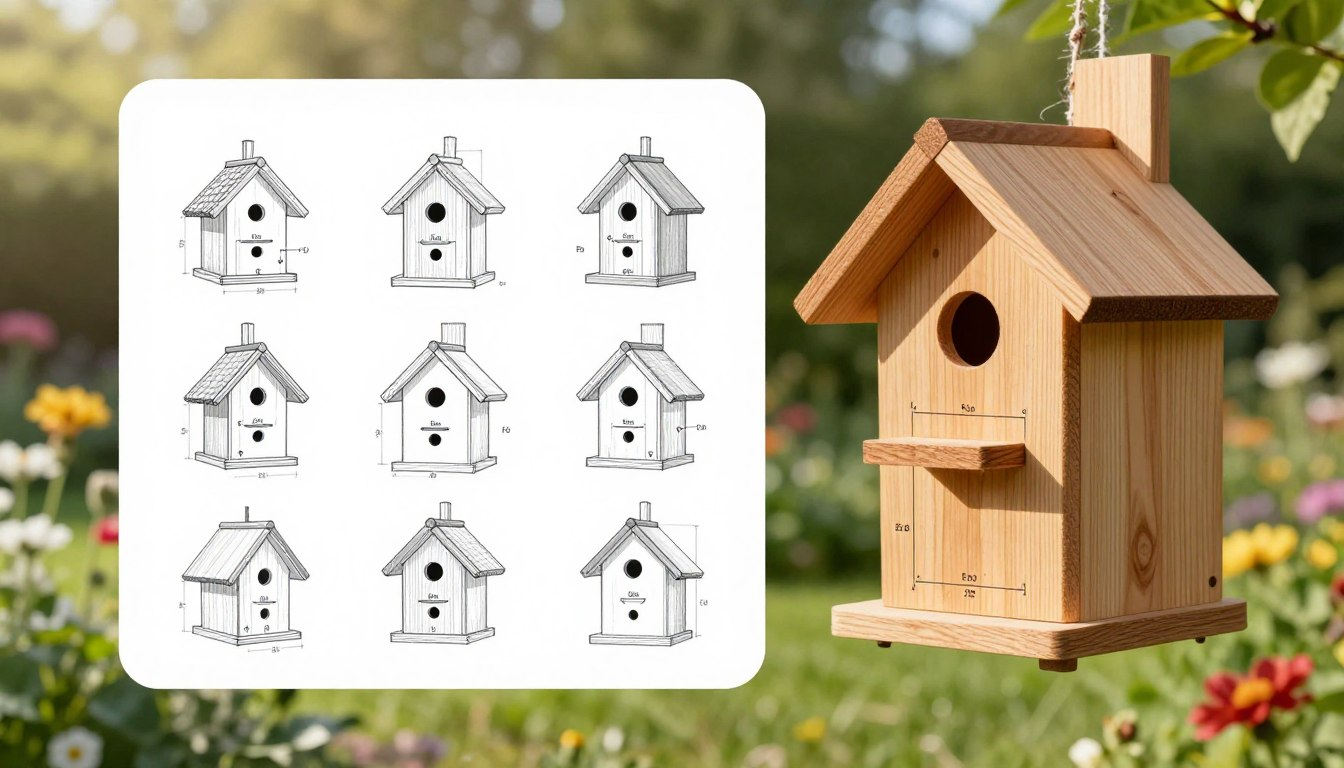
Here’s a scene that will sound familiar to a lot of backyard birders: you put up a birdhouse sometime in late winter, maybe early spring. You pick a decent spot. The box looks right. You check it every few days for weeks. Nothing happens. The whole breeding season passes and the box just sits there — dry, empty, untouched — while you watch House Sparrows build a messy nest in a gap behind the gutter downspout three feet from your kitchen window.
That feeling of being quietly outsmarted by a sparrow is one of the more specific frustrations in birding. And nine times out of ten, the cause isn’t location and it isn’t luck. It’s a measurement. A hole that’s 3 mm too wide. A box that’s two inches too shallow. A mounting that gives any passing raccoon a perfectly comfortable grip point. Birds don’t move into a box because it exists — they evaluate it, quickly and precisely, for safety, dimensions, and habitat match. Get any one of those things meaningfully wrong and the box will sit empty, season after season, while native birds nest somewhere less convenient and House Sparrows thrive regardless.
This guide fixes that. It covers the exact dimensions that work for the most common cavity nesters across North America and the UK, how to build a box that holds up through weather cycles, how to mount it so predators can’t reach it, and how to maintain it so birds actually return year after year. The numbers in here are specific because the biology is specific. Treat them that way.
⚡ The five things that actually determine occupancy
>Entrance hole diameter — the single number you cannot fudge. Too large and starlings move in. Too small and your target species can’t enter.
>Interior depth — deeper means safer. A shallow box lets a raccoon’s arm reach the nest floor.
>Floor dimensions — too cramped and the nest is unhealthy; too cavernous and the bird can’t keep chicks warm.
>Mounting height and predator guard — a smooth pole with a baffle beats any tree or fence post, every single time.
>Habitat match — build the right box, put it in the wrong place, and it will still sit empty. Every species needs specific surroundings.
Start Here: The Five-Step Decision Before You Drill Anything
Most birdhouse mistakes happen before a single screw is turned. The wrong hole gets drilled, the wrong wood gets used, the box goes up in the wrong spot — and then people spend years wondering why it’s empty. Running through these five questions first takes ten minutes and saves months of disappointment.
>Which birds actually live near you? Wrens, chickadees, bluebirds, and swallows are excellent starting points across most of North America. In the UK, blue tits and great tits occupy most garden boxes. Spend twenty minutes with a notebook in your yard before deciding anything. The birds that are already visiting are the birds most likely to use a box.
>Pick your target species — then lock in the hole size. This is the one measurement you cannot approximate. It determines who gets in and who gets excluded. Everything else can be slightly generous. The hole cannot.
>Use at least the minimum floor size and hole-to-floor depth for that species. These numbers exist because the birds’ body size, nest-building behaviour, and predator-avoidance all depend on them. They aren’t suggestions.
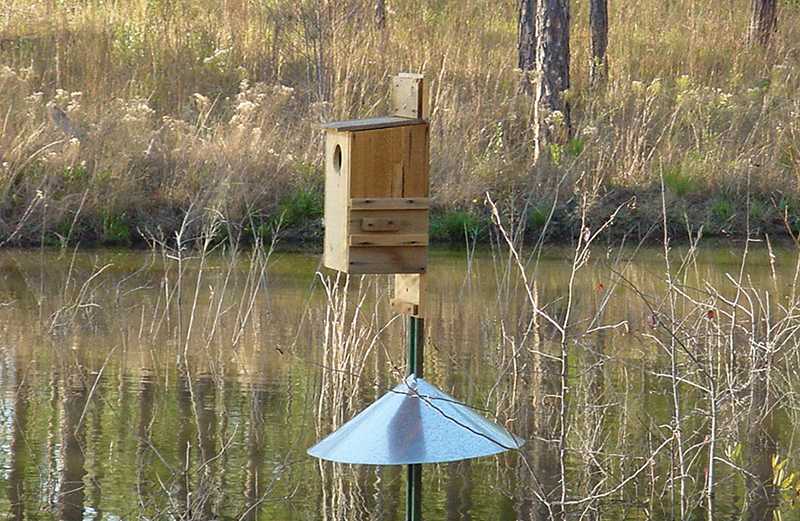
>Mount in the right habitat with a predator guard. A box on a smooth bare pole with a stovepipe or cone baffle is genuinely safer than a box on a tree, on a fence post, or on any surface a cat, raccoon, or snake can climb without effort.
>Get it up before breeding season starts — and clean it every year without fail. A neglected box becomes a parasite den. Old nests harbour mite populations that can overwhelm the next brood. An annual clean of ten minutes per box is the single cheapest investment in long-term occupancy.
Birdhouse Size Chart: North America
These are inside dimensions — measured from wall to wall, floor to ceiling. The entrance hole diameter is the number that matters most: it determines which species can physically enter, which ones are excluded, and whether a predator can reach a paw inside. Everything else can flex slightly. This number cannot.
| Species | Entrance Hole | Floor (inside) | Box Height | Hole Above Floor | Mount Height | Notes |
|---|---|---|---|---|---|---|
| House Wren | 1″ (25 mm) | 4″ × 4″ | 7″ | 5″ | 4–10 ft | Best near shrubs and woodland edges; the small hole excludes most competitors |
| Black-capped Chickadee | 1⅛″ (29 mm) | 4″ × 4″ | 9″ | 7″ | 5–15 ft | Add 1–3″ of wood chips — many chickadees won’t nest without a substrate base to excavate from |
| Tufted Titmouse | 1¼″ (32 mm) | 4″ × 4″ | 9″ | 7″ | 5–15 ft | Same setup as chickadees; add wood shavings on the floor |
| White-breasted Nuthatch | 1¼″ (32 mm) | 4″ × 4″ | 9″ | 7″ | 5–15 ft | Metal entrance plate strongly recommended — squirrels target these boxes specifically |
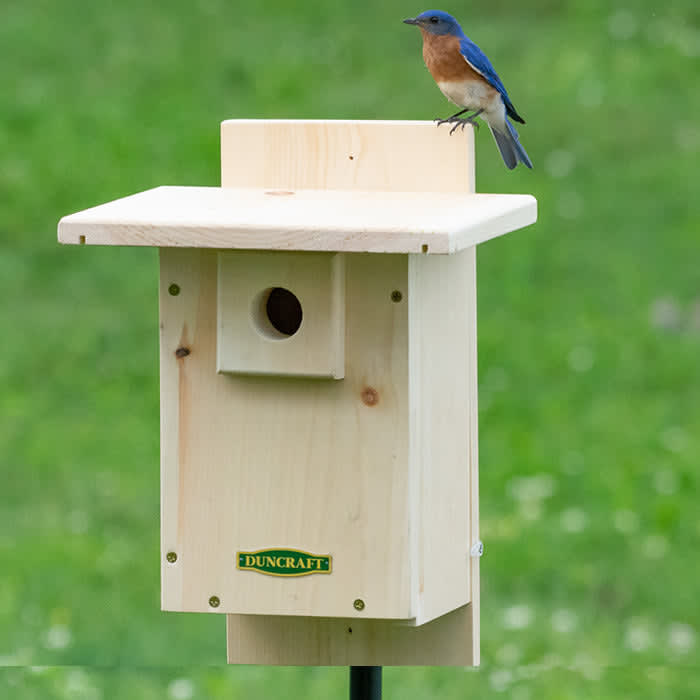
| Eastern Bluebird / Tree Swallow | 1½″ (38 mm) | 4″×4″ to 5″×5″ | 8–10″ | 6–8″ | 4–6 ft (bluebird) / 5–15 ft (swallow) | Pair boxes 15–25 ft apart to reduce territorial conflict in shared habitat |
| Downy Woodpecker | 1¼″–1⅜″ | 4″ × 4″ | 9″ | 7″ | 5–20 ft | Fill with wood chips — woodpeckers excavate rather than build up |
| Northern Flicker | 2½″ (64 mm) | 7″ × 7″ | 17″ | 15″ | 10–15 ft | Large, deep box is essential; pack with wood chips; strong mounting required |
| American Kestrel | 3″ (76 mm) | 8″ × 8″ | 16″ | 13″ | 10–30 ft | Open country bird; face the entrance south or east in most of North America |
| Eastern Screech-Owl | 3″ (76 mm) | 8″ × 8″ | 16″ | 13″ | 10–30 ft | Add 2–3″ of wood shavings; secure mount and predator guard are non-negotiable |
| Wood Duck | Oval ~4″W × 3″H | ~12″ × 12″ | ~22″ | ~17″ | ~10 ft over/near water | An interior “ladder” for ducklings to climb out is critical; 3″ of wood shavings required |
UK and Europe: Different Birds, Different Rules
If you’re birding in the UK or Europe, most North American charts won’t serve you — the species are different, and so are the conventions. The most important decision you’ll make before choosing hole size is box type: hole-fronted for most tits and sparrows, open-fronted shelf box for robins, wrens, and wagtails. Getting this wrong is the single most common UK birdhouse mistake. A robin will never use a round-hole box. A blue tit will rarely use an open-fronted shelf. They’re solving for different things.
| Species | Box Type | Entrance | Notes |
|---|---|---|---|
| Blue Tit, Coal Tit, Marsh Tit | Hole-fronted | 25 mm | Smaller hole excludes most competition; never add a perch — it helps predators, not birds |
| Great Tit, Tree Sparrow | Hole-fronted | 28 mm | The most versatile starting hole size for UK gardens — works for a wide range of garden visitors |
| House Sparrow, Nuthatch | Hole-fronted | 32 mm | UK house sparrows are native and genuinely declining — they benefit meaningfully from box support |
| Robin, Wren, Pied Wagtail, Spotted Flycatcher | Open-fronted shelf | Open face | A round-hole box is useless for robins — they need to see out. Mount low, partially hidden by vegetation |
Put boxes up in late winter — late January or February at the latest. A sheltered, northeast-facing position avoids the worst of summer afternoon heat and keeps spring rain from blowing directly into the entrance. This one positioning habit resolves more occupancy problems than any hardware change.
Printable Hole-Size Template
If you’re building multiple boxes, a printed paper template keeps your holes consistent across sessions and materials. Print at 100% scale only — never “fit to page,” which quietly rescales everything. Verify the 25 mm circle with a physical ruler before you use it on anything.
Common hole sizes — quick reference
>25 mm (≈ 1″) — House Wren, Blue Tit, Coal Tit
>28 mm — Great Tit, Tree Sparrow
>29 mm (≈ 1⅛″) — Black-capped Chickadee
>32 mm (≈ 1¼″) — Tufted Titmouse, White-breasted Nuthatch, House Sparrow
>38 mm (≈ 1½″) — Eastern Bluebird, Tree Swallow (do not exceed this for these species)
>64 mm (≈ 2½″) — Northern Flicker
>76 mm (≈ 3″) — American Kestrel, Eastern Screech-Owl
>Oval 4″W × 3″H — Wood Duck (cut from cardstock and trace directly)
How to Build One That Lasts
A well-built birdhouse is a weatherproof wooden box you can open once a year. That’s genuinely all it needs to be. The birds aren’t evaluating the joinery. What they’re evaluating — without knowing they’re evaluating it — is heat control, dry nesting material, and whether the exit is manageable when it’s time to fledge. The build decisions that matter all trace back to one of those three things.
Wood and Hardware
Cedar is the gold standard — it resists rot without chemical treatment and handles freeze-thaw cycles over many years without warping. Cypress runs a close second. Pine works fine and is considerably cheaper; it just needs replacing sooner. Whatever you use, aim for ¾″ (19 mm) boards throughout. Thinner walls heat up fast in summer, and on a July afternoon the temperature differential between a ¾″ cedar box and a ½″ pine box can be enough to stress a clutch.
Use galvanised or stainless steel screws throughout, not nails. Nails hold through the first season without complaint, but by year three they’ve worked themselves loose and the box rattles in a strong wind, which is not reassuring to a prospective tenant. And never use pressure-treated lumber anywhere inside the box — the compounds leach and have no place near developing chicks.
Weatherproofing That Actually Matters
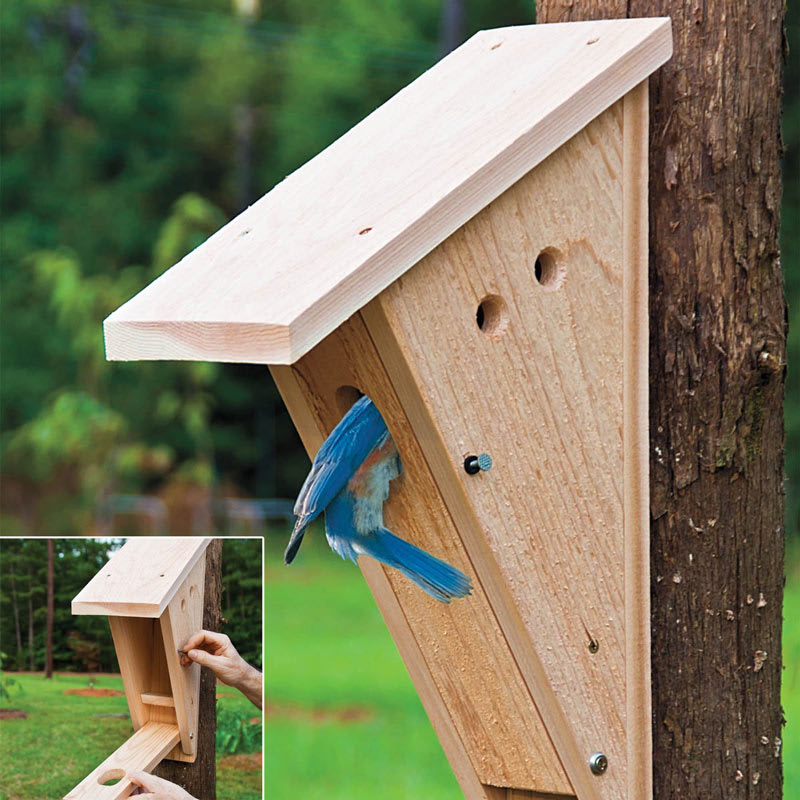
The roof overhang is the most consistently underbuilt part of any birdhouse plan. Extend it at least 2–4 inches over the front face and about 2 inches over the sides. Cornell Lab’s NestWatch recommends a 5-inch front overhang specifically to prevent raccoons from reaching in from above — that’s more than most commercial plans specify, and the extra inch or two is worth building in from the start.
Three other details worth getting right rather than good enough:
>🔽Recessed floor: Set the floor ¼–½″ above the bottom wall edge so the box doesn’t wick water upward into the nest when the ground is wet.
>🕳️ Drainage: Four small holes (⅜–½″) in the floor corners, or clipped corners — either works fine. This is the first thing to check when a box fails to attract birds despite good positioning.
>💨 Ventilation: Narrow gaps under the roofline or small holes near the top of the side walls. On a still July afternoon the difference between a ventilated and unventilated box can be 10–15°F inside. That difference determines whether eggs survive.
Cleaning Access — The Feature Most Boxes Get Wrong
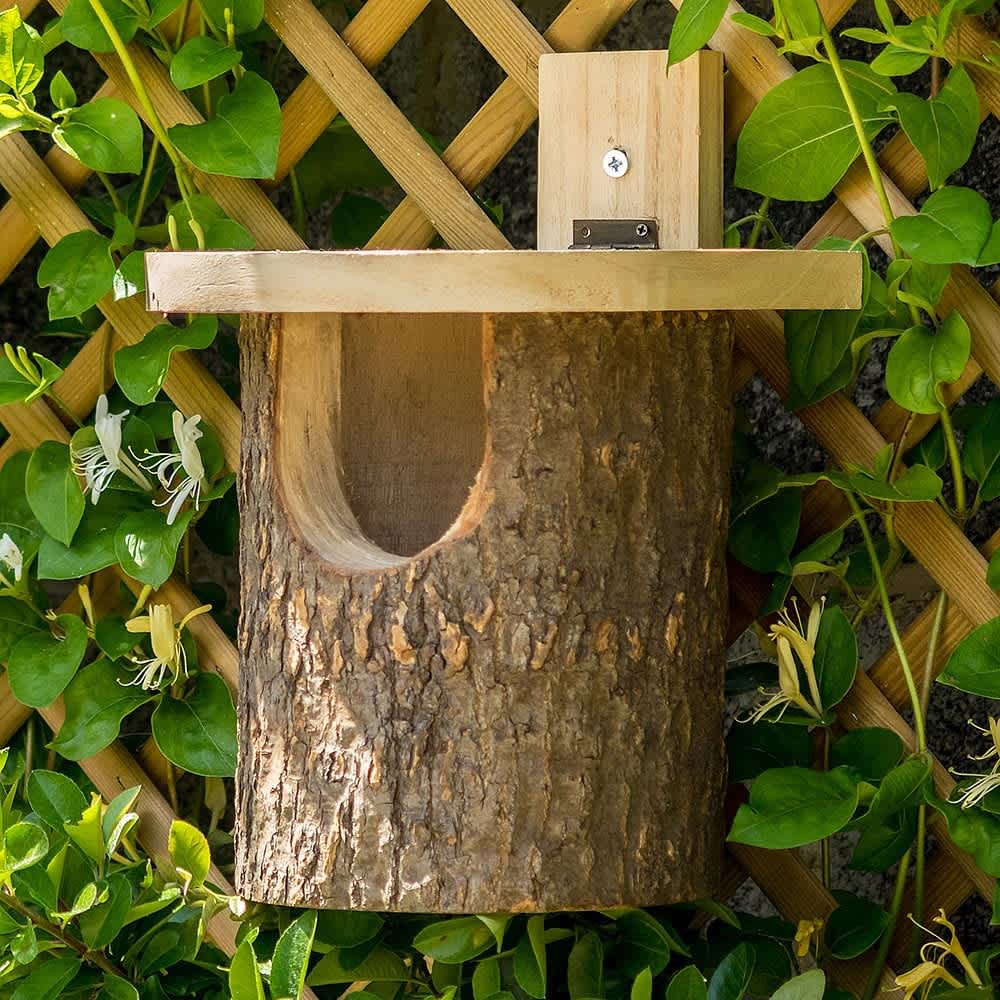
This is the detail that separates a birdhouse from a bird ornament. Build in a hinged side panel or a removable roof with a secure latch. If cleaning requires a screwdriver, a stepladder, and fifteen minutes of contortion, it won’t happen — and an uncleaned box is a significantly less attractive nesting site every year. Parasites and compacted old nest material from one season make the box measurably worse for the next occupant. The clean takes ten minutes. The latch mechanism that makes it possible takes thirty seconds to install. Do it during the build.
The Five Numbers That Determine Whether Birds Move In
Most people focus on aesthetics when choosing or building a birdhouse. The birds are focused on five specific numbers — and they’re evaluating them quickly, often in a single scouting visit that lasts less than a minute. Get all five right and the box has a real chance of being occupied. Miss one significantly and the bird moves on to a hollow tree branch that suits it better.
What Makes a Good Birdhouse: Feature by Feature
Don’t Add a Perch
This surprises people every time. Perches feel welcoming — they’re the international visual shorthand for “friendly birdhouse.” But cavity-nesting birds don’t need them. They grip the entrance hole directly with no trouble, and have been doing so in hollow trees for considerably longer than birdhouses have existed. What a perch actually does is give House Sparrows a comfortable staging post and provide predators with a convenient grip point while working at the entrance hole. Leave them off every time.
Rough Up the Interior Below the Hole
Fledglings need to climb up to the entrance hole when they’re ready to leave. A smooth interior wall is a serious slip hazard — birds that can’t get purchase on the wall below the entrance either fall back, exhaust themselves trying, or fledge later than they should. Use a chisel to score horizontal grooves into the wood below the entrance hole, or staple a strip of hardware cloth in that area. This matters particularly for tree swallows and wood ducks, both of which have young that need to climb a significant distance to exit.
Predator Protection: The Real Hierarchy
This is an area where a lot of well-intentioned advice is muddled. Here’s an honest ranking of what works and in what context:
| Guard Type | Best For | Notes |
|---|---|---|
| Stovepipe baffle | Pole-mounted boxes | ~8″ diameter, 24–36″ long, installed below the box; the most effective option available |
| Cone baffle | Pole-mounted boxes | Works well when generously sized with good clearance below the box; easier to install than stovepipe |
| Noel guard (wire mesh tunnel) | Tree- or fence-mounted boxes | Reduces reach-in predation; best paired with a separate baffle or deterrent on the mounting surface |
A stovepipe baffle on a smooth metal pole is the closest thing to a predator-proof setup a backyard birder can realistically achieve. Snakes, raccoons, and cats that can’t grip a smooth pole cannot reach the box — full stop.
Metal entrance plates address a separate but related problem: squirrels chewing the entrance hole larger. Once a 1½″ bluebird hole becomes 2″, you’ve lost your species filter and potentially compromised the nest. A metal entrance plate is a £3–5 fix that installs in minutes and lasts indefinitely.
Placement: The Habitat Problem Nobody Talks About Enough
The single most common reason a well-built birdhouse sits empty is wrong habitat. Not wrong hole size, not wrong wood, not wrong mounting height — wrong location. Birds are looking for specific conditions, and a box that ticks every dimensional box will still be ignored if the surroundings don’t match what that species needs to raise a brood safely.
The part that makes this frustrating is that habitat mismatch is invisible. A box in the wrong place looks exactly like a box in the right place. Nothing about it signals the problem. It just sits there, season after season, while the bird you were hoping to attract nests in a hedge two gardens over.
Orient the Entrance Thoughtfully
In warm climates, give the entrance morning light and afternoon shade — a southwest-facing box on a hot July afternoon can reach interior temperatures that kill eggs and chicks. In areas with strong spring storms, point the opening away from prevailing winds. In most of North America that means facing east or southeast. In the UK, a north to northeast face is conventional for most hole-fronted boxes, keeping out the worst of rain and preventing overheating in summer.
Habitat by Species
Space Multiple Boxes Correctly
Most cavity nesters are territorial and actively patrol the area around their nest. Two bluebird boxes 20 feet apart almost always means one occupied box and one defended-but-empty decoy. Space same-species boxes well apart — at least 100 yards for bluebirds — and give each pair its own territory with clear visual separation between boxes.
One more thing that gets overlooked: avoid placing boxes near any area regularly treated with pesticides or herbicides. Cavity nesters feed their chicks almost entirely on insects during the first weeks of life. A garden that chemically suppresses insect populations is a garden that cannot support nesting birds, regardless of how well-built the box is. The box is the last piece of the puzzle, not the first.
Maintenance Calendar
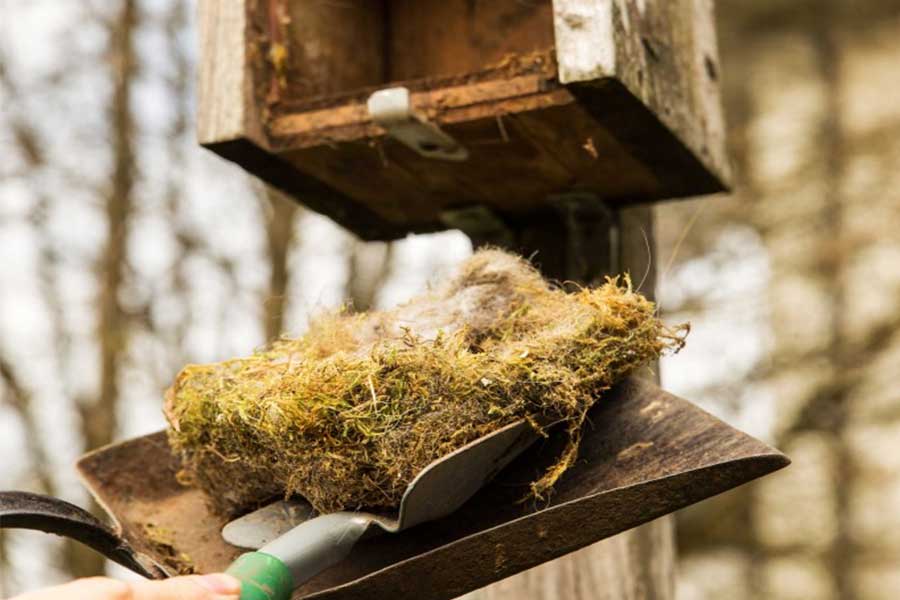
The boxes that stay occupied year after year are the ones that get opened, cleaned, and checked once a season. That’s the whole system — ten minutes per box, once a year, done consistently. Boxes that never get cleaned accumulate parasites and compacted old nest material that make them significantly worse as nesting sites with each passing year. A bird that nested successfully in your box this year will not return next year if the box is full of last year’s debris when it arrives to scout.
| Time of Year | What to Do | Why It Matters |
|---|---|---|
| Late winter | Install or repair boxes; tighten screws; add or inspect predator guards; clear drainage and ventilation holes | Birds begin scouting sites earlier than most people realise — February in milder climates, sometimes earlier |
| Early spring | Quick pre-season check: stable mount, hole size intact, no wasp nests started, clean interior | Catches problems before birds commit to the site — much easier than addressing them mid-occupancy |
| Breeding season | Stay away. If monitoring, be brief, quiet, and consistent — no more than once a week, in and out quickly | Repeated disturbance causes genuine stress; some species will abandon a clutch in response to over-monitoring |
| After fledging | Remove the old nest entirely; scrape debris; check seams and roof for leaks | Old nests harbour mites and blowfly larvae that can overwhelm the next brood if left in place |
| Autumn | Deep clean and full inspection; replace any rotten wood; in cold climates, leave boxes up for winter roosting | Extends box lifespan significantly and provides winter shelter in regions where small birds roost communally |
Skip the harsh chemicals. A dry scraper and a stiff brush handle 95% of cleaning jobs. Keep drainage holes open between sessions and replace any wood that’s gone soft — a box that flexes when you push it is a box predators can work at more easily.
Common Mistakes That Keep Birdhouses Empty
These come up so often, and so consistently, that they’re worth naming plainly:
❌ Wrong hole size
The most common issue by a significant margin. A hole 3–4 mm too large opens the box to European Starlings and House Sparrows, both of which will evict or kill native nesters. A hole 3 mm too small means your target species physically cannot enter. The hole is the one measurement that needs to be exact. Everything else can flex slightly. This cannot.
❌ Shallow interior
A 6-inch-deep box sounds reasonable until you factor in that a raccoon’s arm is 8–10 inches long and they are patient, persistent, and strong enough to hold a position while they work. Depth is your passive predator defence. Every inch below the entrance hole is an inch farther a predator has to reach. Use the depth measurements in the chart above as minimums, not targets.
❌ No cleaning access
If the box can’t be opened without tools and significant effort, it won’t be cleaned. If it won’t be cleaned, it won’t stay attractive over multiple seasons. Sealed or glued boxes are essentially single-use items. Build in a hinged panel or removable roof from the start, not as an afterthought.
❌ Wrong habitat
A bluebird box in a densely wooded lot. A wren box in an open field with no shrub cover. A kestrel box surrounded by tree branches. Habitat mismatch is silent — nothing about the box reveals the problem. Which is exactly why it’s worth getting right before the box goes up rather than diagnosing it two seasons later.
❌ Decorative box, functional failure
Novelty birdhouses with tiny interiors, no drainage, painted inner walls, and perches are sold in enormous quantities at garden centres. Birds don’t use them. They’re yard ornaments. If the box looks like it was designed primarily for human aesthetics, treat it as such and buy or build a purpose-built nest box separately.
❌ Mounted like a climbing frame
A box screwed directly to a tree trunk with branches nearby, a fence post cats can jump from, or a wooden shed wall any squirrel can climb is not a protected nest site. It’s an elevated feeding platform for whatever finds the eggs first. Location and predator guard before everything else.
Frequently Asked Questions
What’s the best single hole size to start with if I’m not sure what birds are nearby?
In North America, a 1⅛″ hole (29 mm) covers chickadees and similarly sized songbirds without inviting too many competitors. In the UK, 25 mm is the standard starting point for tits. Put up one box, watch what scouts it over the first few weeks, and use what you observe to guide any additional boxes. A journal of species and timing is far more useful than a guess.
Do I need to put nesting material inside before hanging the box?
For most songbirds — wrens, bluebirds, swallows — no. They bring their own material and often prefer a clean, empty box. The exceptions are species that need a substrate to work from: woodpeckers, owls, and wood ducks all benefit from 2–3 inches of clean, untreated wood shavings on the floor. Never use dryer lint — it mats when wet and can trap nestlings against the floor.
When should the box go up?
Late winter — late January to early February in most of North America. Birds scout nest sites several weeks before you’d intuitively expect, and a box that isn’t in place when territory selection begins is frequently passed over in favour of something that was already there. If you’ve missed the window this year, clean it, hang it, and plan on next year. Birds don’t forget a good location between seasons.
Can robins use a standard round-hole birdhouse?
No — and this causes a lot of frustration when people put up what they think is a “robin birdhouse” and get no takers. American Robins build open-cup nests in trees and on ledges and don’t use enclosed cavity boxes. In the UK, Robins will use an open-fronted shelf box placed low, in a sheltered spot with partial vegetation cover — but they will not use a hole-fronted box regardless of how suitable everything else is. Box type is the first decision for any UK gardener targeting robins.
Why do birds scout a box multiple times but never commit?
Usually one of three things: the hole size is right but the interior dimensions aren’t, the habitat is borderline and something about the immediate surroundings is triggering caution, or a predator has been active near the box — cats leave scent traces that birds can detect and that can deter occupation even after the cat has moved on. If scouting activity drops off entirely after a period of interest, check for any evidence of predator presence in the area around the pole.
The Bottom Line
A birdhouse that sits empty for two or three seasons isn’t failing because of bad luck — it’s failing because one specific thing is wrong, and that thing is usually measurable. The hole is a few millimetres off. The box is mounted somewhere a predator can reach comfortably. The location looks reasonable to a human but is the wrong habitat for the species present. These aren’t mysterious problems. They have specific, fixable causes.
Get the hole size right for your target species. Build deep enough to keep predators out passively. Mount on a smooth pole with a baffle. Put the box where the birds that already live near you actually want to nest. Clean it once a year, briefly, after the young have fledged. Do those five things consistently and the box will stop being an ornament and start being a nest. The birds have been looking for exactly this kind of opportunity — they just need the dimensions to match.
Sources
>Cornell Lab of Ornithology NestWatch — Nest box construction: dimensions, materials, and installation
>National Audubon Society — How to build a birdhouse: species-specific guidance and placement
>RSPB — Putting up a nest box: UK species, hole sizes, and positioning
>National Wildlife Federation — Cavity-nesting birds: habitat requirements and box preferences
>Cornell Lab All About Birds — Birdhouse basics: predator guards, maintenance, and species filters
Dimensions in this guide follow Cornell Lab NestWatch specifications as primary reference, cross-checked against Audubon Society and RSPB published guidelines.