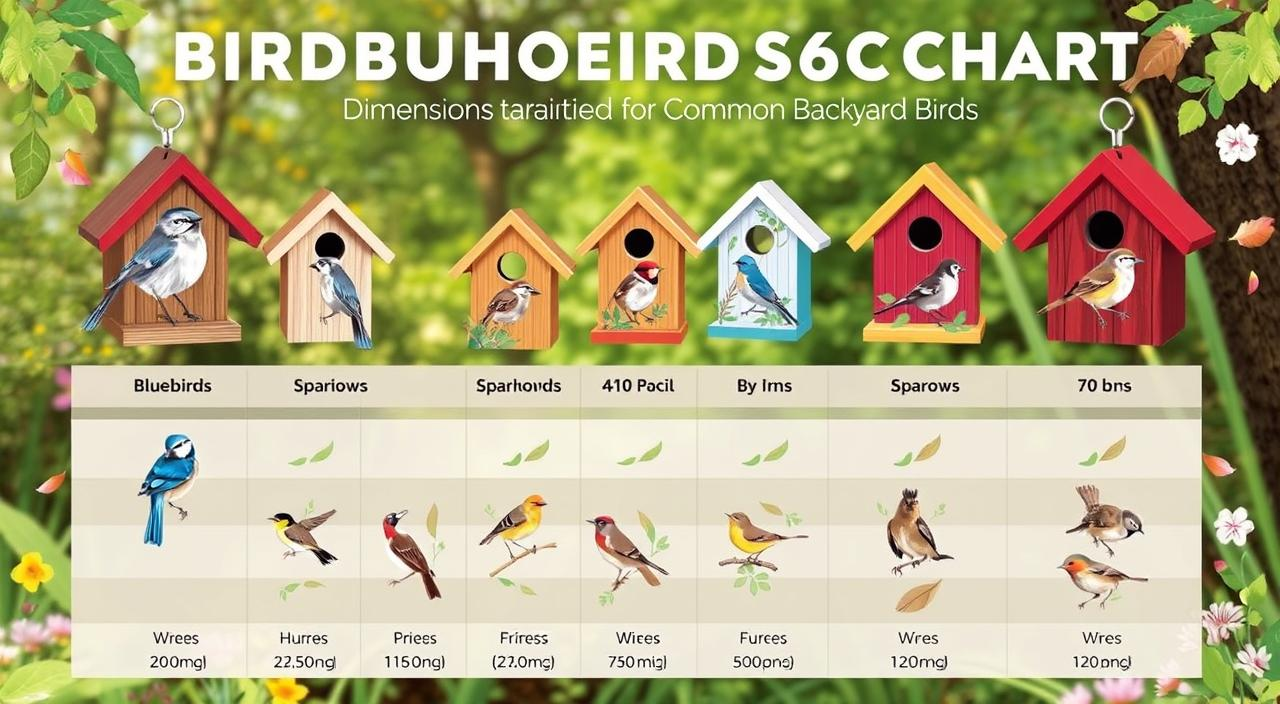
If you want birds to actually nest in your yard, the “right” birdhouse isn’t the cutest one — it’s the one with
the correct entrance hole size and interior dimensions for the species you’re trying to attract.
Quick safety note: Not all birds use cavity “birdhouses.” Many species (like American Robins) build open cup nests and need a
nest shelf or platform instead of an entrance-hole box. Choosing the wrong style is a top reason boxes stay empty.
How to use this birdhouse size chart
- Pick a target bird (example: House Wren, Chickadee, Eastern Bluebird).
- Match the entrance hole first. The hole is the “gatekeeper” for species selection and basic access control.[1]
- Match interior floor + height next. Too small = cramped; too big = may encourage competitors.[1]
- Install at the recommended height and in the right habitat (open field vs. woodland edge matters).[1]
- Improve safety with solid mounting and (when appropriate) predator guards — size alone isn’t enough.[1]
Dimensions below are practical starting points summarized from Cornell Lab of Ornithology’s NestWatch guidance and established bluebird resources.
Always prioritize recommendations specific to your region and target species.
[1][3]
Birdhouse measurements explained (so you don’t build the wrong thing)
- Floor (interior): inside width × inside depth (example: 4″ × 4″).
- Interior height: inside floor to inside ceiling (not exterior roof peak).
- Entrance hole diameter: the clear opening size (round) or width/height (oval).
- Hole height above floor: distance from the inside floor to the bottom edge of the entrance hole.
Pro tip: If you already own a box, measure the interior — exterior dimensions can mislead because wood thickness varies.
Birdhouse size chart (common North American cavity nesters)
These are “starting-point” sizes; local climate, predators, and competitors can change what works best.
Use the sources below if you want to build to a specific program standard.
[1][3]
| Species (example) | Interior floor | Interior height | Entrance hole | Hole height above floor | Typical mounting height | Notes |
|---|---|---|---|---|---|---|
| House Wren | 4″ × 4″ (10.2 × 10.2 cm) | 8″ (20.3 cm) | 1″ (2.5 cm) | 6″ (15.2 cm) | 5–10 ft (1.5–3 m) | Often likes cover/edges; smaller holes help exclude larger birds.[1] |
| Chickadee (Black-capped / Carolina) | 4″ × 4″ (10.2 × 10.2 cm) | 8–10″ (20.3–25.4 cm) | 1 1/8″ (2.9 cm) | 6″ (15.2 cm) | 5–15 ft (1.5–4.5 m) | Woodland edge works well; avoid full sun in hot climates.[1] |
| Tufted Titmouse | 4″ × 4″ (10.2 × 10.2 cm) | 8–10″ (20.3–25.4 cm) | 1 1/4″ (3.2 cm) | 6″ (15.2 cm) | 5–15 ft (1.5–4.5 m) | Similar needs to chickadees; keep entrance unperched.[1] |
| White-breasted Nuthatch | 4″ × 4″ (10.2 × 10.2 cm) | 8–10″ (20.3–25.4 cm) | 1 3/8″ (3.5 cm) | 6″ (15.2 cm) | 5–20 ft (1.5–6 m) | Often uses mature trees; mount near woodland edge.[1] |
| Eastern / Western Bluebird | 5″ × 5″ (12.7 × 12.7 cm) | 8–12″ (20.3–30.5 cm) | 1 1/2″ (3.8 cm) | 6″ (15.2 cm) | 4–6 ft (1.2–1.8 m) | Best in open areas; pair with predator protection and avoid dense shrubs right beside the box.[3] |
| Tree Swallow | 5″ × 5″ (12.7 × 12.7 cm) | 8–12″ (20.3–30.5 cm) | 1 1/2″ (3.8 cm) | 6″ (15.2 cm) | 5–15 ft (1.5–4.5 m) | Likes open habitat near water/meadows; can compete with bluebirds in some areas.[1] |
| Downy Woodpecker | 4″ × 4″ (10.2 × 10.2 cm) | 10–12″ (25.4–30.5 cm) | 1 1/4″ (3.2 cm) | 8″ (20.3 cm) | 6–20 ft (1.8–6 m) | Deeper cavity helps with nest safety; mount near woods/edge.[1] |
| Northern Flicker | 7″ × 7″ (17.8 × 17.8 cm) | 16–18″ (40.6–45.7 cm) | 2 1/2″ (6.3 cm) | 12″ (30.5 cm) | 6–20 ft (1.8–6 m) | Large cavity nester; sturdy mounting is essential.[1] |
| American Kestrel | 8″ × 8″ (20.3 × 20.3 cm) | 12–16″ (30.5–40.6 cm) | 3″ (7.6 cm) | 10–12″ (25.4–30.5 cm) | 10–30 ft (3–9 m) | Open country; place away from heavy foot traffic; stable mounting matters.[1] |
| Eastern Screech-Owl | 8″ × 8″ (20.3 × 20.3 cm) | 16–24″ (40.6–61.0 cm) | 3″ (7.6 cm) | 15″ (38.1 cm) | 10–30 ft (3–9 m) | Woodland edge; keep the interior deep and the box stable.[1] |
| Wood Duck (nest box) | 12″ × 12″ (30.5 × 30.5 cm) | 24″ (61.0 cm) | Oval ~3″ × 4″ (7.6 × 10.2 cm) | 16″ (40.6 cm) | 6–20 ft (1.8–6 m) | Near water; add interior traction/ladder so ducklings can climb out.[1] |
| Purple Martin (compartment) | 6″ × 6″ (15.2 × 15.2 cm) | 6–7″ (15.2–17.8 cm) | ~2 1/8″ (5.4 cm) or starling-resistant opening | N/A (varies by design) | 12–20 ft (3.6–6 m) | Requires wide-open placement and more active management than most backyard boxes.[1] |
Open-nester shelf chart (birds that don’t use entrance holes)
Many backyard favorites don’t use cavity boxes. If you build a “standard birdhouse” with an entrance hole for these birds,
you may never get nesting success — even if everything else is perfect.
| Species | Recommended structure | Approx. base size | Placement tip |
|---|---|---|---|
| American Robin | Nest shelf (open-front) | 6″ × 6″ to 8″ × 8″ (15.2–20.3 cm) | Under eaves or on a protected ledge; avoid direct midday sun. |
| Eastern Phoebe | Small platform / ledge | About 6″ × 6″ (15.2 cm) | Under porches/bridges; needs overhead cover. |
| Barn Swallow | Open ledge or nesting-cup support | Varies (support is the goal) | Inside barns/sheds/porches; they prefer human structures. |
Placement tips that matter as much as size
- Match habitat: Bluebirds and many swallows prefer open areas; wrens tolerate more cover.[1]
- Face away from harsh weather: In many regions, avoid openings facing prevailing wind/rain.[1]
- Give flight space: Don’t tuck the entrance behind dense branches where predators can ambush.
- Use safe spacing: Some species are territorial. If boxes compete, increase distance or change placement.[1]
Build quality checklist (predators, heat, moisture)
- No perch: perches are unnecessary for most cavity nesters and can help competitors.[1]
- Ventilation: small vents under the roof on both sides help reduce overheating.
- Drainage: drill 4 small holes in the floor so water can escape.
- Interior traction: rough interior or ladder grooves help fledglings climb out.
- Predator protection: pole baffles/guards and entrance hole guards can help when appropriate.[1]
- Safe materials: untreated wood is preferred; avoid toxic finishes inside the box.
Approval-safe note: This page focuses on prevention and responsible nest box practices.
Avoid publishing or following advice that promotes harming wildlife or disturbing active nests.
Common sizing mistakes (and why they backfire)
- Oversized entrance holes: invites competitors and increases risk.
- Shallow boxes: makes it easier for predators to reach nest contents from the opening.
- Wrong bird type: building a cavity box for open-nesting birds (robins/phoebes) = empty box.
- No ventilation in hot climates: overheating can be deadly for nestlings.
- Poor placement: mounting where predators have easy access or where habitat doesn’t match the target species.[1]
FAQ
What is the most important measurement in a birdhouse size chart?
The entrance hole size is usually the most important because it controls which birds can enter and helps reduce competitor access.
Next most important is interior depth/height, which improves nest safety.
[1]
Can I make one “universal” birdhouse size?
Do birds reuse birdhouses?
Some species may reuse boxes, but many prefer a clean cavity. Cleaning at the end of the season helps reduce parasites and improves success.
Avoid opening a box unnecessarily once eggs or nestlings are present.
[1]
When should I put up a birdhouse?
Late winter to early spring is a good target in many areas so birds can find the site before breeding season.
Timing varies by species and region.
[1]
Sources & further reading
- Cornell Lab of Ornithology — NestWatch: “Right Bird, Right House” and related nest box resources.
View source - Cornell Lab of Ornithology — NestWatch species example: Eastern Bluebird (box guidance).
View source - Sialis (Bluebird Research) — entrance hole sizing and bluebird box specs.
View source