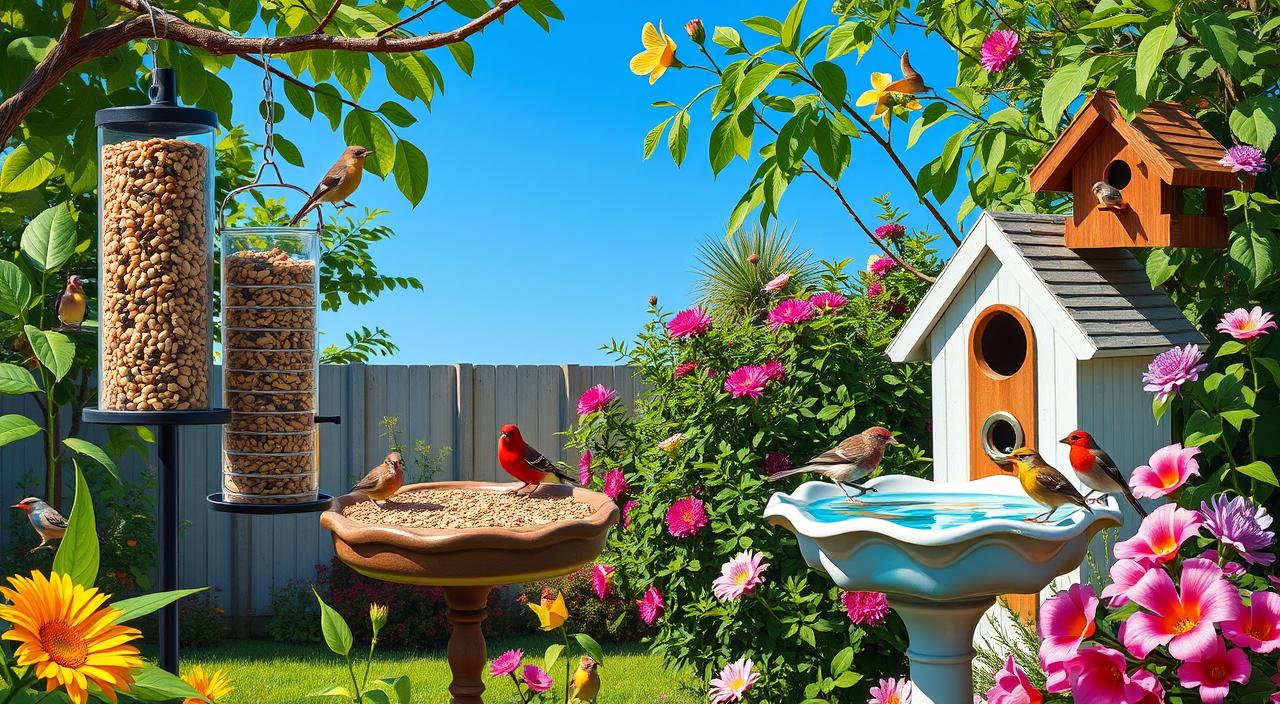
The best way to attract backyard birds is to build what birds already look for in nature:
food, water, and shelter—plus a few safety fixes so your yard
doesn’t become a danger zone.
The Bird-Friendly Habitat Triangle: Food, Water, Shelter
If your yard reliably provides food, water, and shelter,
birds will treat it like a stop on their daily route—often returning at the same times each day.
Feeders help, but the most bird-rich yards also include natural options like native plants and layered cover.
| Need | What birds want | Simple backyard upgrade |
|---|---|---|
| Food | Seeds, insects, fruit, nectar (varies by species + season) | One quality feeder + one native berry/seed plant |
| Water | Shallow drinking/bathing + moving water draws attention | Shallow bath or dish; add a dripper or fountain (optional) |
| Shelter | Protection from hawks/cats + places to rest and nest | Dense shrubs, evergreens, brush pile, or a properly placed nest box |
Food That Attracts Backyard Birds (and Which Birds It Brings)
Choose food based on the birds you want. Start simple, then add variety after you see who shows up.
The goal is consistency—birds notice patterns.
Best “starter” seeds
- Black-oil sunflower: attracts many common songbirds and is a great first choice.
- Nyjer (thistle): excellent for finches (use a nyjer feeder).
- Safflower: often less attractive to some nuisance species; can be helpful in mixed yards.
High-energy extras
- Suet (especially in cool weather): draws woodpeckers and other insect-eaters.
- Fruit (orange halves, grape jelly in small amounts, sliced apples): can attract fruit-loving birds.
- Nectar for hummingbirds: keep it fresh and skip dyes; change more often in warm weather.[2]
| Food | Common visitors | Tip to reduce waste |
|---|---|---|
| Black-oil sunflower | Many songbirds | Use a tray or seed catcher under feeders |
| Nyjer | Finches | Use a nyjer sock/tube to prevent spills |
| Suet | Woodpeckers, nuthatches | Use a cage feeder; replace before it turns rancid |
| Nectar | Hummingbirds | Smaller feeders spoil slower; keep it fresh and clean frequently.[2] |
that produces berries or seeds in your region. It builds a natural “food web” that feeders can’t replace.
Bird Feeder Options and Placement (So Birds Feel Safe)
Feeder styles that cover most backyards
- Tube feeder: great for smaller birds; reduces seed exposure to rain.
- Hopper feeder: higher capacity; attracts a wider range (but can get messy if not maintained).
- Platform feeder: attracts ground-feeders too, but needs the most cleaning attention.[2]
- Suet cage: simple, effective, and low-cost for insect-eaters.
Placement rules that increase visits
- Near cover (shrubs/trees): birds like a quick escape route from hawks.
- Not inside dense cover: too close can create ambush spots for cats.
- Stable + reachable for you: if it’s annoying to refill, you won’t keep it consistent.
Feeder Hygiene: How to Feed Birds Without Spreading Illness
Clean feeders are not optional—dirty feeders can spread illness. A practical baseline is cleaning
about every two weeks, and more often during wet weather, heavy use, or if you notice sick birds.[2]
Simple cleaning routine (seed feeders)
- Empty old seed and remove hull build-up.
- Scrub with hot water. If you disinfect, follow reputable guidance and product labels; use only properly diluted solutions and never mix chemicals.[2]
- Rinse thoroughly and let the feeder dry completely before refilling.[2]
- Rake/clean the ground under feeders to reduce waste and rodents.[2]
Hummingbird feeder hygiene
Water Sources That Attract Backyard Birds Fast
Many homeowners are surprised by this: adding water often increases bird activity faster than adding a new feeder.
Birds need water for drinking and bathing, and moving water is especially attractive.
Best bird bath setup
- Shallow + grippy: use a textured surface or add a flat rock for footing.
- Partial shade: helps keep water cooler in summer.
- Refresh frequently: birds prefer clean, fresh water.
Make windows safer by placing water wisely
Keep baths and feeders either very close to windows or far away to reduce dangerous impacts,
and use visible window treatments where collisions are likely.[1]
Shelter, Native Plants, and Nesting Support
If you want a yard that attracts backyard birds all year (not just when the feeder is full),
prioritize layered planting:
tall trees (canopy) + shrubs (mid-layer) + perennials/grasses (ground layer).
What to plant (high impact)
- Evergreens for winter shelter
- Berry/seed producers for fall and winter calories
- Flowering natives that support insects (critical for many nesting birds)
Nest boxes: helpful, but not always necessary
- Use nest boxes only for species that naturally nest in cavities.
- Install them securely, out of direct harsh sun, and away from easy predator access.
- Clean boxes outside of breeding season to reduce parasites.
Safety Upgrades: Windows, Cats, and Predators
Prevent window strikes (biggest home hazard)
Birds often hit glass because reflections look like open sky or habitat. Effective prevention focuses on making
glass visible from the bird’s approach angle—especially with outside treatments.[1]
- Use external screens/netting or visible patterns/markings that break up reflections across the pane.[1]
- Position feeders/baths within about 3 feet of windows or more than 30 feet away.[1]
- At night during migration, reduce indoor/outdoor lighting when possible.
Keep birds safer from cats
- If you can: keep cats indoors or supervise outdoor time.
- Add dense shrubs as cover, but don’t place feeders where cats can hide directly underneath.
keep it warm/quiet, and contact a licensed wildlife rehabilitator if it doesn’t recover promptly.[1]
Seasonal Checklist: Keep Birds Coming Back All Year
Spring
- Offer reliable food and keep water fresh.
- Delay heavy pruning so nesting birds aren’t disturbed.
Summer
- Refresh water more often; add shade if baths heat up.
- Clean feeders more frequently during storms/humidity.[2]
Fall
- Leave seed heads on some plants (natural food for migrants).
- Check window-risk areas and reinforce deterrents.[1]
Winter
- Provide reliable calories (sunflower, suet).
- Keep water available (heater or frequent ice removal).
- Day 1: Choose one feeder + one quality seed.
- Day 2: Add water (shallow dish/bath).
- Day 3: Place feeder safely + add nearby cover.
- Day 4: Add suet or nyjer depending on local birds.
- Day 5: Add one native shrub or perennial (region-appropriate).
- Day 6: Add window safety markings where needed.[1]
- Day 7: Set a repeating cleaning/refill routine.[2]
Troubleshooting: Common Backyard Bird Attraction Problems
Squirrels won’t stop raiding the feeder
- Use a baffle on poles, move feeders farther from launch points, and choose feeders designed to resist access.
- Reduce spilled seed (it trains squirrels and attracts rodents).
Ants, bees, or wasps on hummingbird feeders
- Move the feeder location and keep nectar fresh; avoid sticky/oily substances near ports.[2]
Aggressive birds monopolize the area
- Offer multiple small feeding stations spaced apart.
- Use different feeder types to serve different feeding styles.
You’re seeing sick birds
- Pause feeding temporarily, clean everything thoroughly, and follow local wildlife guidance if an outbreak is reported.[2]
FAQ: How to Attract Backyard Birds
What is the fastest way to attract backyard birds?
Add clean water and a consistent food source. Water often increases visits quickly,
and a reliable feeder trains birds to return.
What seed attracts the most backyard birds?
Black-oil sunflower is one of the best “all-purpose” seeds for many common backyard songbirds.
How often should I clean bird feeders?
A practical baseline is about every two weeks, and more often in wet weather, heavy use,
or if sick birds are observed.[2]
How do I stop birds from hitting my windows?
Make glass visible with outside treatments (screens/netting or visible patterns/markings),
and use safer feeder/bath distances (very close or far).[1]
Do I need a birdhouse to attract birds?
Not always. Many backyard birds don’t use nest boxes. Dense native shrubs and trees often provide better shelter for more species.
What should I do if a bird hits my window and looks stunned?
Place it in a ventilated, dark container in a quiet warm area and contact a licensed wildlife rehabilitator if it doesn’t recover promptly.[1]
References
- Humane World for Animals (Humane Society). “Protect Birds by Stopping Them From Flying Into Windows.”
Source - Cornell Lab of Ornithology (All About Birds). “How to Clean Your Bird Feeder.”
Source
Editorial note: This article is educational and does not replace local wildlife or rehabilitation guidance.